Behringer Model D

Behringer Model D: An Accessible Analog Synthesizer for Modern Musicians
Are you intrigued by classic analog synthesizers, but hesitant about the high prices often associated with them? The Behringer Model D (see current price) offers an approachable and affordable way to experience vintage synth sound without breaking the bank. While it doesn’t aim for luxury or cutting-edge digital features, the Model D provides authentic analog tones and hands-on control, making it an appealing choice for both newcomers and experienced producers alike.
Understanding the Behringer Model D: Origins and Purpose
To appreciate the Model D, it’s helpful to know where it comes from and what it sets out to achieve. Drawing direct inspiration from the legendary Minimoog Model D—a cornerstone of 1970s music production—the Behringer Model D brings vintage design and analog circuitry into today’s market, but at a fraction of the cost of a genuine Moog.
For a deeper understanding of the history, design, and musical significance of the original instrument, you can explore this detailed overview of the Minimoog Model D at The Henry Ford Museum. This approach is consistent with Behringer’s philosophy of making classic gear more accessible to a wider range of musicians.
Not everyone agrees with Behringer’s cloning strategy—some applaud the affordable access, while others criticize it for lack of originality. Regardless of opinion, there’s no denying that the Model D allows more musicians to engage with analog synthesis who otherwise might not have the opportunity.
Design and Build: Function Over Frills
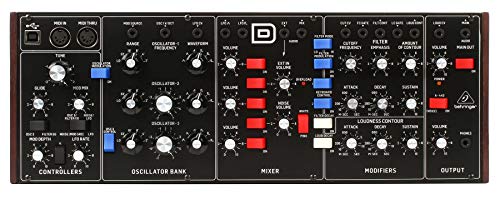
Right out of the box, the Model D impresses with its compact form factor and straightforward panel layout. Every function is labeled and accessible with dedicated knobs and switches, echoing the workflow of classic subtractive synthesis and prioritizing usability over visual flair. There are no deep menus or hidden options—just clear, hands-on control, ideal for learning and quick adjustments.

Although its chassis mixes metal with plastic knobs, the model feels sturdy for regular studio or stage use. While purists may notice the cost-conscious construction, the device still stands up well for its price. Its size, roughly 12 x 5 x 3 inches and under four pounds, also makes it exceptionally portable and easy to integrate into small spaces or mobile setups.
Sound Engine and Features: The Heart of the Model D
At its core, the Model D is powered by an all-analog sound engine, including three classic oscillators, a renowned 24dB/octave ladder filter, two envelope generators, and an LFO. This arrangement is tailored to deliver the warmth and organic dynamism for which analog synthesis is celebrated. Unlike modern digital synths, which might offer features like wavetable synthesis or built-in effects, the Model D deliberately focuses on classic sounds and manipulation.
The connectivity options are another highlight. Model D offers a wide variety of connections: Control Voltage (CV) and Gate for modular users, MIDI via both DIN and USB for digital integration, and standard audio outputs. A unique Poly Chain feature lets you link multiple units to increase polyphony—a handy addition, though it doesn’t fully substitute for a true polyphonic instrument.
One notable limitation: the Model D doesn’t include patch memory. Each sound must be dialed in manually and in real time. For quick preset recall, this may be a drawback. However, this limitation cultivates a hands-on approach and deeper familiarity with analog synthesis, which many owners come to appreciate.
Performance and Everyday Use
The experience of playing and programming the Model D centers around its physical controls. Every sonic element is just a knob or switch away, which not only encourages experimentation but speeds up the learning curve for those new to hardware synthesis. Veterans will feel right at home, while beginners can expect some trial and error before mastering sound design—but that’s part of the fun and educational value.
Sound-wise, the Model D delivers wonderfully rich, powerful, and nuanced tones. The oscillators possess the subtle drift prized by vintage synth fans, while the ladder filter imparts smooth resonance or gritty edge as needed. Envelopes are quick, precise, and responsive, enabling tight basses, expressive leads, and creative modulation for a variety of musical genres.
In terms of integration, the Model D is equally comfortable in the studio or on stage. Its compact build and versatile connections allow for DAW recording, hardware sequencing, or modular jamming. Whether you need a dependable workhorse or a spark for creative exploration, it adapts well to both roles.
Model D in Context: Strengths, Limitations, and Value
As with any synth, the Model D has its distinct pros and cons. Its strengths include:
- Authentic analog sound at a highly accessible price
- Comprehensive connectivity for both modern and vintage setups
- Rugged, compact design suited for travel and tight spaces
Yet, there are areas where it may not suit every workflow:
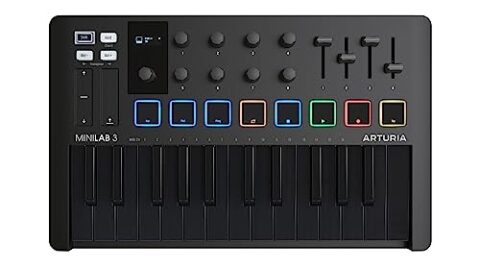
- Lacks an integrated keyboard (external controller required)
- No patch memory for instant sound recall
- Some cost-saving measures in hardware quality
Despite these limitations, the Model D represents strong value—delivering genuine analog character and tactile control at a price point that welcomes newcomers as well as budget-conscious pros.
Comparing Your Options: How Does Model D Stack Up?
If you’re considering the Model D, it helps to place it alongside some popular alternatives. The Moog Grandmother and Werkstatt-01 both carry the Moog legacy forward—Grandmother with more features (like a keyboard and advanced patching) at twice the price, and Werkstatt-01 as a more basic, experimental kit. The Model D lands in a sweet spot, offering classic sounds and modular integration at a friendlier price.
Arturia’s MiniBrute 2/2S synths up the ante on modern features, bringing sequencers, patch memory, and a unique filter. They’re more versatile, but also costlier and somewhat different in sound character. If you need advanced flexibility, Arturia might be a better fit—if purist analog tone is your goal, the Model D remains highly compelling.
Lastly, the Korg MS-20 Mini provides a more raw, aggressive sonic palette and comes with its own mini keyboard, featuring semi-modular patching. Sonically and functionally, it deviates from the Model D, but both compete in a similar price range.
Is the Model D Right for You?
The Model D is an excellent fit for:
- Musicians and producers eager for classic analog sound on a budget
- Modular synth enthusiasts adding a traditional voice
- Producers seeking vintage flavor in a modern setup
- Beginner synthesists looking to build hands-on skills
However, you may want to explore other options if you:
- Require instant access to a wide range of presets
- Prefer an all-in-one keyboard instrument
- Rely on automated digital workflows or software integration
- Seek the absolute easiest introduction to synthesis
Conclusion: A Hands-On Classic for Today’s Musicians
The Behringer Model D succeeds in delivering vintage-inspired analog synthesis in a highly usable and affordable package. While it’s not designed for those seeking all-digital features or high-end luxury, it opens the door to genuine analog sound and hands-on creativity for a much wider audience. If you value direct control, portability, and authentic tone—and you’re willing to embrace a little knob-turning—the Model D stands out as a promising centerpiece or companion for your audio setup.