Universal Audio Bock 187
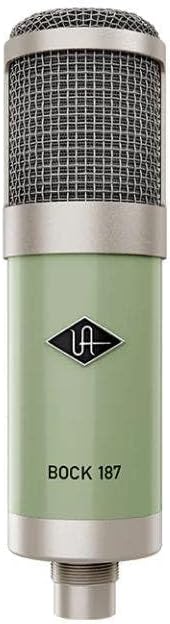

Universal Audio Bock 187 Review: What Actually Matters
If you’re in search of a condenser microphone that delivers the classic warmth of a vintage FET with the confidence of modern engineering, the Universal Audio Bock 187 (see current price) is worth your attention. While it won’t be the right match for every studio or every budget, it’s designed for engineers and artists who know the payoff of a large diaphragm FET mic and crave sonic character, not just technical neutrality. In this review, we’ll explore what makes the Bock 187 distinctive, where it excels, and how it fits within today’s competitive microphone landscape.
The Philosophy Behind the Bock 187
To understand what sets the Bock 187 apart, it helps to consider Universal Audio’s intentions. Rather than chasing market trends or cutting costs, UA set out to capture vintage character—those warm, harmonically rich qualities prized in classic studio microphones—without the headaches and quirks of aging gear. The Bock 187 is a FET (field-effect transistor) microphone with transformer-coupled output, built to grant you that legendary analog presence in a robust and reliable package.
Instead of trying to reinvent the wheel, the Bock 187 is aimed squarely at users who already appreciate the appeal of large-diaphragm FETs: engineers, producers, vocalists, and instrumentalists after a touch of analog color. If your priority is a microphone that, from the first session, delivers musical, consistent results without fuss, the Bock 187 could be in your wheelhouse. Those interested in comparing the Bock 187 to other modern FET condensers should take a look at the Audio-Technica AT4040.
If you’re interested in the story behind microphones like the Bock 187 and how condenser microphones have evolved over their long history, you’ll appreciate this comprehensive history of the condenser microphone, which details its invention, key technological advancements, and lasting impact on the audio industry.
Carrying the Bock Legacy Forward
This approach is no accident. David Bock—a respected name in microphone design—is closely involved in this project, signaling Universal Audio’s intent to merge heritage design with modern reliability. If you find yourself indifferent to the subtleties between vintage “flavor” and analytical clarity, this mic might seem unnecessary. But for those who recognize and desire a character-rich tone, the Bock 187 hits a sweet spot between nostalgia and dependability.
Build, Features, and Real-World Handling
Moving from philosophy to physical reality, the Bock 187 maintains focus on substance over flash. Out of the box, it’s clear this is a tool built for serious, steady use rather than one designed to sit as a showpiece.
Design and Durability
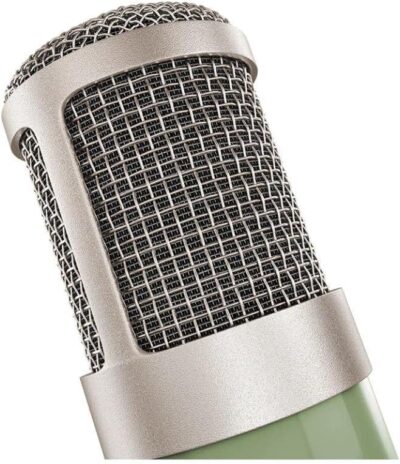
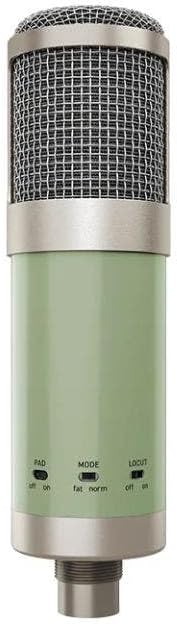
At roughly 1.5 pounds, the Bock 187 is neither tiny nor featherweight, but its reassuring heft speaks to a solid metal shell, reinforced grille, and robustly designed controls. Universal Audio’s engineering here is all about long-term usability: the headbasket is sturdy, switches for pattern, pad, and high-pass filter are substantial, and branding is subtle. While you won’t find decorative flourishes, you also won’t find cut corners.
The included accessories follow the same practical logic. You get a well-made shock mount—essential for isolating the mic from unwanted stand vibrations—and a durable hardshell case for safe transport. No XLR cable or pop filter is supplied, which is standard for microphones of this tier; professionals generally have preferences for such essentials anyway.
Features and Specifications
Inside, the mic’s transformer-coupled output and stable FET circuit promise reliable performance session after session. Key specs include:
- Large dual-diaphragm condenser capsule
- FET amplifier circuit with transformer-balanced output
- Frequency response: 20 Hz – 20 kHz
- Three selectable polar patterns: Cardioid, Omni, Figure-8
- -10 dB pad for high-volume sound sources
- High-pass filter to control low-end buildup
- Maximum SPL around 134 dB (with pad)
- Self-noise below 14 dBA
- Standard 48V phantom power requirement
It’s also important to note what isn’t included: There’s no variable pattern control—just three practical choices. There’s no onboard DSP and no bundled pop filter or cables. These omissions actually reflect the mic’s philosophy—keeping the recording process streamlined and focused on sound, not extras.
How Does the Bock 187 Sound?
Moving from specs to sound, the real measure of any microphone is in how it handles actual sources, session after session. The Bock 187 shows its true value in its musical performance across vocals and instruments.
Performance on Vocals
Vocals recorded with the Bock 187 have a clear, open quality highlighted by a warm, vintage undertone. There’s enough color to add character but not so much that the microphone “paints over” the details of a performance. High frequencies remain crisp without becoming brittle, while the midrange strikes a good balance—full, yet neither muddy nor boxy. In practice, this means the microphone rewards strong performances and won’t artificially flatter weak ones through exaggerated EQ. If you want another angle on large diaphragm condenser microphones for vocals, check out our review of the Neumann TLM 103.
Instruments and Versatility
The Bock 187 isn’t just for vocals. On acoustic guitar, the mic reveals string articulation while keeping the overall tone naturally rounded, avoiding harshness. It also does justice to piano, lending openness and subtle depth, and brings an appealing edge to guitar amplifiers—especially useful when paired with the pad for louder sounds. Brass and other rich harmonic sources also gain an engaging liveliness, although those needing strict neutrality might find its color a bit much.
Noise and Polar Patterns
Self-noise is low enough for most studio and vocal applications. For extremely quiet sources in pristine rooms, other microphones push the envelope further, but for regular sessions, noise will not be a practical issue. The three selectable polar patterns—cardioid, omni, figure-8—provide useful versatility. Cardioid rejects room sound from behind, omni keeps things open and natural, while figure-8 offers helpful isolation for side-by-side setups. There is some classic FET off-axis coloration, but it’s moderate and musically pleasing rather than distracting.
Strengths, Limitations, and Position in the Market
To get a full perspective on the Bock 187, it’s helpful to weigh its main strengths and where it yields ground. Understanding these trade-offs helps clarify whether this microphone matches your real-world needs.
Where the Bock 187 Excels
- Captures a genuinely musical FET sound with harmonic richness
- Offers three practical polar patterns for studio flexibility
- Assembled to a high standard for durability and daily reliability
- Pad and high-pass filter are well-implemented and practical
- Transformer-based output delivers desirable analog coloration
Considerations and Potential Drawbacks
- Self-noise, while low, isn’t the absolute quietest available—critical for ultra-quiet classical or field work
- Taller and heavier than some alternatives, requiring robust stands
- No included XLR cable or pop filter
- Priced in the higher range for FET condensers
- Distinct sonic character—better suited for users seeking color rather than strict accuracy
How It Compares: Bock 187 vs. Notable Rivals
To see where the Bock 187 fits, it helps to compare it with a few other industry staples:
- Neumann U87 Ai: Known for neutrality and lower self-noise, the U87 Ai commands a higher price and offers classic versatility, with a more restrained sonic imprint.
- AKG C414 XLII: Highly versatile thanks to more polar pattern options and a brighter, modern sound signature; ideal for those who crave flexibility and clarity.
- Soyuz 017 FET: Focuses on rich harmonic coloration, potentially even surpassing the Bock 187 in terms of “vibe”—but with higher cost and less availability.
If you’re after the unique transformer-backed tone and personality of classic FETs, the Bock 187 is tough to beat. For ultimate neutrality and adaptability, the U87 or C414 may better fit your needs. Those drawn to obvious musical color will appreciate what the Bock brings to the table. If you want to further explore top alternatives, the Neumann TLM 103 and Audio-Technica AT4040 both represent excellent choices in a similar class.
Who Should—and Shouldn’t—Buy the Bock 187?
Understanding the Bock 187’s strengths and design intent, it’s clear that this is not a one-size-fits-all product. It’s a strong choice for audio professionals or passionate enthusiasts who recognize and seek out a specific sonic signature.
Best Fit: Who Will Benefit Most
- Engineers wanting a dependable, characterful FET for everyday use
- Producers seeking out the unmistakable contour of transformer-based analog coloration
- Studios moving from “transparent” microphones to more musically distinctive tools
If you have a thoughtful microphone collection and appreciate what classic, colored sound can add, the Bock 187 will reward you. For those just starting out, its full potential may not be apparent right away—it’s a mic you’ll grow into as your ear develops.
Who Should Look Elsewhere?
- Home studio beginners with strict budgets
- Classical recordists obsessed with vanishingly low self-noise
- Those needing concise, neutral, and uncolored sound as a baseline
- Buyers expecting an all-inclusive accessory kit
- Users in small or highly mobile recording setups seeking compactness
The Bock 187’s specialized strengths won’t be a match for everyone—nor should they be. But that’s exactly what makes it appealing for the right studio.
Value and Long-Term Perspective
Considering its price and capabilities, the Bock 187 should be viewed as a long-term investment in both build quality and sonic attitude. While it’s more expensive than some alternatives, its performance and musicality offer a level of satisfaction that outlasts many fast-moving trends. If you need reliability, character, and a tool that will hold up for years of recording, the value is there. Of course, those counting every dollar or chasing extreme neutrality have other potential choices.
Final Thoughts: Is the Bock 187 Right for You?
To sum up: The Universal Audio Bock 187 is crafted for users who know what they want from a microphone—classic tone, road-ready toughness, and day-in-day-out reliability. It won’t be the quietest, smallest, or lowest-priced condenser you’ll find, but it does deliver where it counts for those whose workflow and taste align with its strengths.
If you recognize your needs among its virtues, the Bock 187 is likely to stay at the heart of your sessions for years to come. If you’re chasing sheer transparency, all-in-one convenience, or entry-level pricing, other options will be a better fit. But for those who value authentic musical color and want a modern take on a studio legend, the Bock 187 justifies its place in any thoughtful, quality-focused mic collection.