Empirical Labs EL8

Empirical Labs EL8 Distressor: The Real Story
In the world of studio equipment, few pieces have earned a reputation quite like the Empirical Labs EL8 Distressor (see current price). Revered for its remarkable versatility and reliability, this compressor has become a staple in professional studios globally. If you’re looking for hardware that can handle everything from subtle dynamic control to bold, character-rich compression, you’ll see why the Distressor is widely considered indispensable. But what exactly makes it stand out—and what should you know before investing in one? Let’s take a closer look.
From Concept to Classic: The Distressor’s Origins
Understanding the Distressor’s story helps clarify its enduring popularity. Empirical Labs, founded by Dave Derr in 1988, set out to tackle practical engineering problems and bridge the gap between old-school tone and modern studio demands. When the Distressor arrived in 1996, it quickly attracted attention for emulating the best of vintage compressors, while offering a level of flexibility and reliability that classic gear couldn’t match. Unlike units that chase a single legendary sound, the Distressor can produce a broad palette of compression styles, fitting seamlessly into nearly any genre or workflow. For those who want a deeper dive into its design, history, and notable uses, check out this comprehensive overview of the Empirical Labs EL8 Distressor on Wikipedia.
The Distressor’s reputation isn’t just hype—its presence in top studios reflects a track record of performance and adaptability that continues to attract engineers and producers alike.
Design, Build, and Hands-On Control
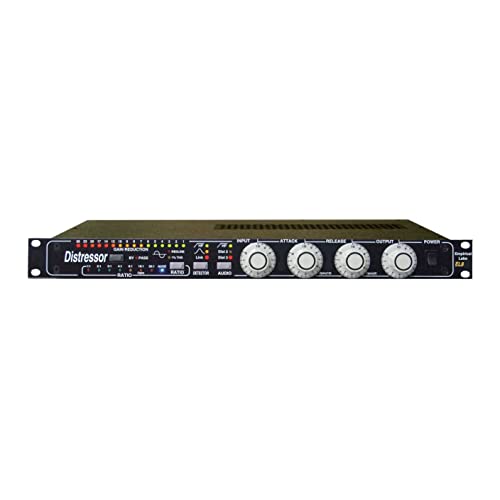
Much of the Distressor’s appeal lies in its robust and intuitive physical design. Housed in a sturdy 1U rackmount chassis, it’s crafted entirely from metal for real-world durability—no flimsy plastics here. The control layout is straightforward: large, clearly-labeled knobs govern input, attack, release, output, and ratio, and bright LED meters clearly display gain reduction and output. This combination of build quality and visual ease means the unit holds up in demanding studio environments while remaining user-friendly.
All controls are fully analog, with continuous (rather than stepped) adjustment to allow for nuanced, immediate tweaks. There’s no digital recall, but this analog directness fosters muscle memory and hands-on learning, helping you develop a real feel for how compression shapes your sound. While precise setting recall requires manual documentation, the tactile experience of the Distressor is both educational and satisfying—perfect for those eager to grow in their craft.
This solid construction also translates into reliability. The EL8 rarely needs more than routine maintenance, offering a longevity and sturdiness superior to many entry-level alternatives.
Features That Make a Difference
The Distressor isn’t just about brawn and feel—it’s packed with technical features that set it apart from the crowd. Core specs include:
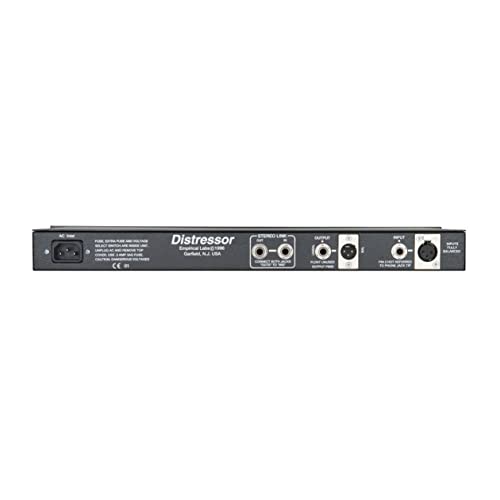
- Connections: Balanced XLR and 1/4” TRS; no special adapters needed.
- Frequency Response: 2 Hz to 160 kHz, far exceeding human hearing.
- Dynamic Range: Up to roughly 110 dB.
- THD: Ranges from ultra-clean to richly saturated, depending on settings.
- Power: Standard IEC cable with selectable voltage.
Compression Modes and Creative Tools
At the heart of the Distressor’s flexibility are its selectable compression ratios (from 1:1 for pure analog tone up to 10:1 for hard limiting) and distinctive character modes, such as:
- “British” mode: Aggressive, fast compression reminiscent of the 1176 “all buttons in” trick.
- “Opto” mode: Smoother, more gentle optical-style compression.
Additional features deepen its sonic toolbox. Selectable analog distortion circuits can infuse anything from subtle warmth to obvious edge; detection circuit options and sidechain filtering permit refined, signal-tailored compression; and stereo linking (with a second unit) enables true dual-channel operation. For those who need absolute precision, user-accessible calibration is available.
Performance in the Studio: What Sets It Apart
So, how does all that translate in practice?
Sound Quality and Versatility
The Distressor is renowned for adapting to virtually any task. Want your vocals smooth and natural? Dial in modest gain reduction, and the unit remains almost invisible. Need punch, grit, or vibrance on drums or guitars? Crank up the ratios, add some harmonic distortion, and the Distressor delivers aggressive color and attitude on demand. Its unique blend of transparency and character is what gives it its staying power on sessions of every kind.
While it can bring elements together with musical “glue,” it’s worth noting that its sonic footprint is more obvious than ultra-clean mastering compressors. For mix bus or mastering duties where absolute neutrality is required, some engineers may opt for alternatives. Still, for vocals, drums, bass, or almost anything else, the Distressor adapts with impressive flexibility.
Practical Use Cases and Learning Curve
For beginners and seasoned professionals alike, the Distressor shines as both a teaching tool and workhorse. On vocals, it can either tame transients or add surface excitement. When working with drums, aggressive settings like the famous “Nuke” instantly deliver intensity—ideal for modern rock or pop mixes. Guitar and bass parts benefit from greater punch, sustain, and tonal consistency. And when you want to unify a full mix, the Distressor’s capacity for “gluing” elements together is hard to match.
Hands-on interaction is part of the experience—the lack of instant recall isn’t a flaw, but an invitation to learn the nuances of compression by ear and feel. The time you spend getting to know its controls pays off with a deeper understanding of dynamics and sound shaping.
Strengths and Considerations
Now that we understand what the Distressor brings to the table, let’s put its main strengths and trade-offs in context.
Key Advantages
- Extremely versatile—handles nearly any compression need
- Professional-grade build designed for reliability and heavy use
- Quick, fluid adjustment with a hands-on, tactile workflow
- Selectable harmonic distortion for added color
- Commonly trusted in professional studios worldwide
Potential Limitations
- No digital recall; settings must be noted by hand for exact repetition
- No built-in presets; all control is manual and by ear
- Stereo operation requires a second unit
- Technical calibration may be needed on rare occasion
- Tonal signature may not suit purist mastering contexts
- Price reflects its pro-level focus—this isn’t entry-level gear
The Distressor in Context: Comparing the Competition
With so many compressor choices—from classic hardware to modern plugins—it’s helpful to see how the Distressor stacks up against popular alternatives:
- Universal Audio 1176LN: Delivers legendary FET-style compression, especially for drums and vocals. While it excels at its signature sound, the 1176 can’t match the Distressor’s broader sonic range or feature set.
- DBX 160A: Known for punch and simplicity, the DBX 160A is great for certain sources but lacks depth and flexibility compared to the Distressor.
- Warm Audio WA76: Offers a cost-effective version of the 1176. It’s a budget-friendly pick, but may not match the Distressor’s durability or sonic options.
- Plugin Emulations: Digital compressors offer affordability, instant recall, and plenty of functional overlap. However, many engineers argue that even the best plugins can’t quite capture the tactile nuance and analog energy of a hardware Distressor, especially when pushed hard.
If you value the ability to cover classic sounds and modern needs in one robust box, the Distressor has few true rivals. If instant recall or seamless digital workflow is your main goal, software solutions or hybrid hardware might make more sense.
Assessing Value: Is It Worth the Investment?
For professionals and committed enthusiasts, the Distressor’s upfront cost is offset by its long-term reliability, sound flexibility, and consistent results across countless sessions. Its value grows as you learn its nuances and put its broad capabilities to use. However, producers working mostly “in the box” or those needing only basic compression will probably find better value in software or entry-level units. Remember too: true stereo compression requires purchasing two units, doubling the investment.
Is the Distressor Right for You?
To help pinpoint whether the EL8 Distressor suits your needs, consider the following profiles:
- Best for: Commercial studios demanding versatility; engineers and producers who want hands-on control; users seeking both clean and character-rich compression; and those interested in learning the nuances of analog hardware.
- Maybe not for: Home or hobbyist producers favoring instant recall; users preferring fully digital workflows; mastering engineers demanding complete transparency; buyers on strict budgets; or those already happy with high-end plugins.
Final Thoughts: Why the Distressor Remains a Studio Staple
If your priority is a compressor capable of covering everything from classic hues to modern punch—built to survive years of intense use—the Empirical Labs EL8 Distressor is hard to beat. It rewards those who explore its features with a blend of sonic character and adaptability few competitors can match. While it won’t instantly make anyone a better engineer, it offers a toolkit designed to help you shape your sound with confidence and intention.
Ultimately, the Distressor’s enduring reputation stems from its ability to deliver both the expected and the exceptional. For dedicated users willing to invest time in their craft, it remains a mainstay in studios large and small, and a benchmark in the evolution of audio compression hardware.