Audio Answers:
What Are the Main Types of Audio Compressors?
Question: “I’m just starting with music production and keep hearing about different audio compressors. What are the main types of audio compressors and what does each one do?”

Audio Compression: Foundations and Practical Choices
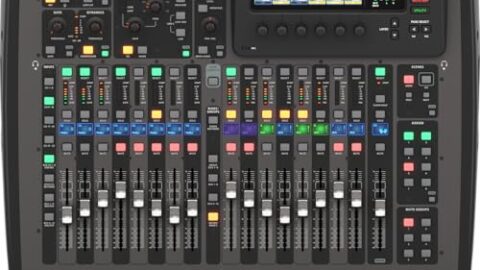
Audio compression is a cornerstone of modern music production, responsible for giving recordings their polished, balanced sound. Most compression today takes place within a digital audio workstation, which provides the tools and flexibility needed for detailed control. While the controls and terminology might seem technical at first glance, understanding how compression works—and how different types of compressors shape your mix—can open up a world of sonic possibilities. Let’s start with the basics and then explore how to select the right compressor for any situation.
What Is Audio Compression?
At its core, audio compression manages the difference between the loudest and softest parts of a sound. On an untreated recording, volume swings can make it hard for listeners to hear details or enjoy a comfortable experience—they might find themselves constantly adjusting the volume. Compression addresses this by reducing the level of louder signals and, in some cases, raising quieter ones. The result is a more even, controlled musical experience that retains detail and impact. If you want to dig deeper into the mechanics, types, and applications of compression in audio, check out this comprehensive overview of dynamic range compression which covers its principles and real-world uses.
This process doesn’t guarantee a perfect mix on its own, but it plays a crucial supporting role. Without compression, vital elements like vocals or drums could get lost, while unpredictable levels can make a song sound unrefined.
Why Compressors Matter in Music Production
Compressors help mixes sound professional, consistent, and clear across any playback system—from studio monitors to everyday headphones. By smoothing out level spikes and bringing quieter nuances forward, compressors make sure no essential part of the performance is left behind. Whether you’re working with vocals, drums, guitars, or the entire mix, compression brings all the pieces together for a unified sound.
Mastering Compressor Controls
To make the most out of any compressor—regardless of type—it’s important to understand its common controls:
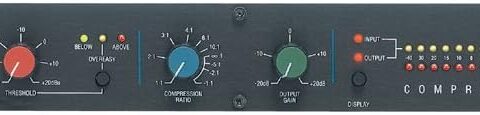
- Threshold: Determines the signal level at which compression begins. Too high, and little happens; too low, and the dynamic character of your sound may disappear.
- Ratio: Sets the strength of compression once above the threshold (e.g., a 4:1 ratio means for every 4dB over, only 1dB gets through uncompressed).
- Attack: Adjusts how soon the compressor kicks in after the signal exceeds the threshold. Fast attack tames sharp transients, while slower attack allows initial impact to come through.
- Release: Controls how fast compression stops after the input goes below the threshold. A fast release returns to normal quickly, while a slower release smooths out changes and affects overall feel.
- Knee: Shapes how compression starts—hard knee applies full compression right at the threshold, while soft knee introduces it more gently for a natural sound.
- Make-up Gain: Restores lost overall volume after compression, ensuring your mix stays balanced in loudness.
Becoming familiar with these settings allows you to tailor compression to your creative goals, whether you want transparency, character, control, or a combination.
The Landscape of Compressor Types
Not all compressors are created equal. Different designs have developed over the years, each imparting their own characteristics to the audio. For example, hardware units such as the Neve 1073SPX have become classic choices in professional studios, offering distinctive sonic qualities compared to their software counterparts. Knowing when and why to choose a particular compressor increases your range as a producer or engineer.
Analog vs. Digital Compressors: A Brief Overview
The first compressors used analog circuitry—transistors, tubes, optical cells—which each influenced sound in particular ways. Analog gear can impart sonic warmth, color, or subtle distortion prized by many engineers. Digital compressors, by contrast, use algorithms to achieve their effect. These can emulate classic analog gear or go beyond, offering precision, instant recall, and options not available in hardware.
Sometimes the situation calls for the unique color of an analog circuit or its software equivalent. Other times, the flexibility and fine control of a digital compressor are just what you need.
Main Families of Compressors and Their Strengths
While there are many hybrid designs and niche circuits, the core types of compressors you’ll encounter are:
- VCA (Voltage Controlled Amplifier): Precise, reliable, and versatile—great for anything needing energy and control.
- FET (Field Effect Transistor): Fast and punchy—adds presence and excitement to vocals, drums, and more.
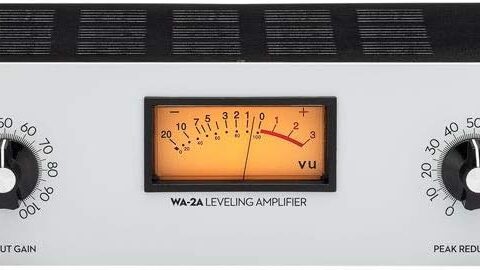
- Optical (Opto): Smooth and musical—ideal for gentle dynamics control, especially on vocals and bass.
- Vari-Mu (Tube): Warm and cohesive—perfect for “gluing” mixes and adding subtle harmonic richness.
Digital compressors can mimic all of the above or offer entirely new approaches, such as multiband, sidechain, and parallel compression for specialized tasks.
Understanding Each Compressor Type
Let’s explore how each main type works, what makes them unique, and where they’re commonly used. Recognizing these qualities will help you pick the right tool for any challenge.
VCA Compressors: Versatility in Control
VCA compressors use voltage-controlled amplifiers for gain reduction, allowing for high accuracy and consistency. This makes them especially good for modern mixes that require tight, punchy control.
- Strengths: Transparent or punchy (based on settings), fast reaction, stable and dependable.
- Applications: Perfect for drums, guitars, and entire mixes where stability and energy are needed. Also a mastering favorite for their subtlety.
- Classics: SSL G Series Bus Compressor, DBX 160.
FET Compressors: Speed and Impact
FET compressors use special transistors for super-fast response and a distinctive lively character. Originally intended to mimic tubes, they’ve become famous for their ability to add punch and “edge” —especially on vocals and drums.
- Strengths: Adds energy, excitement, and harmonic coloration.
- Applications: Go-to for bringing vocals forward, making drums stand out, or adding attitude to lead instruments.
- Classics: Universal Audio 1176.
Optical Compressors: Smooth, Musical Dynamics
Optical compressors use a light element and a light-sensitive resistor; the result is a generally slower, natural-sounding response. These are prized for gentle leveling and imparting musical smoothness, especially when working with sustained sources.
- Strengths: Naturally smooth and transparent; rarely harsh.
- Applications: Excellent for vocals and bass, where evenness and warmth are desirable.
- Classics: Teletronix LA-2A.
Vari-Mu Compressors: Warmth and Cohesion
Vari-Mu (short for variable-mu, or variable gain) compressors use vacuum tubes to dynamically adjust gain based on signal strength. As the input increases, the ratio increases gently; this provides musical glue and rich, subtle saturation to your audio.
- Strengths: Adds warmth, cohesion, and character without squashing the mix.
- Applications: Common on mix busses and in mastering; ideal for “gluing” instruments or adding final polish.
- Classics: Fairchild 670, Manley Variable Mu.
Digital and Software Compressors: Ultimate Flexibility
While many software plugins faithfully recreate analog classics, digital compressors also offer features that would be impossible or impractical in hardware—like look-ahead processing, multi-band compression, and customizable sidechains. Their precision, recallability, and flexibility make them mainstays not just for emulation, but for advanced creative control.
- Strengths: Precise, flexible, convenient, and capable of handling any source from subtle mastering to wild creative effects.
- Applications: All-purpose, including vocals, drums, busses, and frequency-specific tasks.
Beyond Basics: Specialized Compression Techniques
Once you’re comfortable with the main compressor types, you can start exploring specialized forms of compression to solve unique mix problems or achieve distinctive effects.
Multiband and Sidechain Compression
Multiband compressors split the audio into frequency bands (such as lows, mids, and highs), letting you compress each separately. This is invaluable when you want to control boominess, tame harshness, or de-ess vocals without affecting the rest of the signal. Sidechain compression, meanwhile, uses one sound to trigger compression on another—for instance, making a bass duck out of the way when a kick drum hits, a staple in electronic and dance music. It can also make room for dialogue in podcasts and broadcast settings.
Parallel and Hybrid Compression
Parallel compression blends a heavily compressed version of a track with the dry original, resulting in enhanced punch and fullness while preserving dynamic nuance. Hybrid compressors combine design features from multiple compressor types—like VCA, opto, and tubes—to give you flexible control over character and functionality in a single unit or plugin.
Choosing the Right Compressor for Your Needs
With so many options, the choice comes down to your source material, the sound you’re after, and your workflow preferences. Here are a few considerations to guide your selection:
- What source are you working with? For drums and percussion, fast-acting compressors like VCA or FET often excel. For vocals, opt for opto compressors for smoothness, or FET for extra presence and energy. Mastering and bus work often benefit from Vari-Mu’s warmth or VCA’s transparency.
- Do you want character or transparency? Choose VCA or digital for clean results; go with FET, opto, or Vari-Mu if you seek warmth and harmonic subtlety. Don’t be afraid to combine them in parallel for depth.
- What’s your workflow style? Hardware offers hands-on control and sonic charm at the expense of convenience. Digital plugins provide instant recall, flexibility, and versatility. Both have their place—mix and match as your creative process evolves.
Quick Reference Guide
- Smoothing vocals: Opto or Vari-Mu compressor
- Adding punch to drums: FET or VCA compressor
- Tight bus control: Clean digital or VCA compressor
- Mastering warmth and cohesion: Vari-Mu; for transparency, VCA
- For rhythmic “pump” (common in EDM/dance): Use sidechain compression
Wrapping Up: Using Compression with Intention
No matter the style of music or stage of production, audio compression is about balance and control—whether you’re seeking subtlety or bold creative effect. Each type of compressor—VCA, FET, opto, Vari-Mu, or digital—has its strengths and personality. There’s no single “best” option; the right choice depends on your material and the emotion you want to convey.
As you experiment, listen closely to how each compressor shapes your sound. Your ear is your greatest asset in learning what works, when, and why. By understanding how compression works and applying it thoughtfully, you’ll be well on your way to crafting mixes that are both polished and full of character.