Avantone Pro CLA-10A

The Studio Monitor Legacy: Why the White Cone Still Matters
To appreciate what the Avantone Pro CLA-10A (see current price) brings to your studio, it helps to understand why its inspiration, the Yamaha NS10, became a legend. Revered not for a lush or pleasant sound but for its brutal honesty, the NS10 was a favorite among engineers because mixes that sounded clear on these monitors tended to sound good everywhere. Legendary mix engineer, Chris Lord-Alge, whose initials grace the CLA-10A, was instrumental in popularizing this transparent approach to monitoring—helping producers refine mixes to translate in real-world listening scenarios. Today, you can find the NS10 in almost every major music studio.
With the CLA-10A, Avantone set out to faithfully capture the clarity and no-nonsense response of the NS10, while adapting it for today’s needs. The result is a powered, bi-amped speaker that removes the need for outboard amplification but holds fast to the tradition of unvarnished truth-telling in the studio. If you seek out monitors for precision and reliability rather than entertainment, that heritage is the core of what this model offers.
Design and Build: Form Meets Function in a Familiar Package
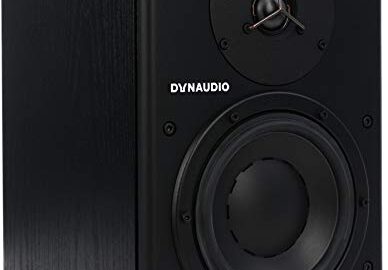
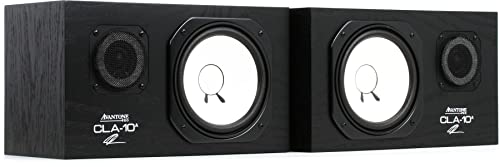
Avantone’s CLA-10A instantly evokes the archetypal studio “look”: a no-fuss black box accented by a white cone woofer. While there are some modern tweaks to the finish, the function-first aesthetic remains clear—these are tools built for work, not show.
The cabinets, constructed from robust MDF and weighing in at about 25 lbs each, are engineered for durability in demanding studio environments. Every design decision prioritizes stability and longevity, so the speakers are best suited to installation in permanent studio setups.
Connectivity is kept straightforward and professional. Balanced XLR and unbalanced TRS inputs ensure compatibility with a wide range of gear. Input level and a high-frequency adjustment control let you tailor the sound to your environment. Notably, the speaker features Avantone’s VTPC (“Variable Tissue Paper Control”) switch—a clever nod to the old NS10 “tissue over the tweeter” trick, allowing you to adjust treble response for subtler highs if needed.
Technical Overview: Built for Clarity, Engineered for Truth
Moving beyond aesthetics, the CLA-10A’s technical details are all about honest, accurate monitoring. Its bi-amped Class AB design—200W driving the lows and 100W dedicated to the highs—ensures each driver receives precise power for cleaner separation and control. The 7-inch white cone woofer and 1-inch soft dome tweeter are carefully matched, with a passive crossover at 1.8kHz for seamless frequency transition.
- Frequency response: 60Hz – 20kHz (deliberately limited sub-bass for critical listening)
- Inputs: Balanced XLR and unbalanced TRS
- Features: VTPC treble control, auto-standby for energy conservation, and basic room-tuning controls
While the CLA-10A doesn’t include digital processing, wireless features, or advanced room correction, these omissions align with its philosophy: to remain a pure, honest reference point in the studio. Instead, the focus is on classic analog accuracy and practical reliability. This approach is shared by other highly accurate monitoring tools, such as the Neumann KH 80, which also appeals to those who prioritize unembellished, reliable sound for critical mixing decisions.
Performance: In Use and in Context
When you first listen through the CLA-10A, you’re greeted by a sound signature that is intentionally revealing. The midrange is focused and detailed, bringing vocals and guitars forward with remarkable presence. Bass response is tight and controlled, but it doesn’t reach into deep sub-bass territory—reflecting the monitor’s role as a critical listening tool, not a club speaker. Treble can be pronounced, especially at louder levels, but the VTPC switch offers a way to tame this if needed.
The result is a monitor that forces you to address sonic imperfections head-on. Mixes that sound balanced here are more likely to translate well across headphones, earbuds, and speakers of all kinds. For producers and engineers, this brutal honesty is why tools like the CLA-10A still matter—especially if your work goes out into the world via streaming sites, car speakers, and portable devices.
Day-to-Day Workflow and Comfort
Setting up the CLA-10A is refreshingly simple: connect your cables, tweak your levels, and you’re ready to work. The ample amplification pushes peak levels up to about 104dB, more than enough for most rooms. However, as with many Class AB designs, a faint idle hiss may be audible at very close range—rarely an issue during actual use.
Over long sessions, sensitive listeners may notice some ear fatigue, especially from the critical midrange. Taking regular breaks is wise, a habit that aligns with healthy mixing practices in any studio.
Given their size and weight, these speakers are best for dedicated spaces. Mobility is not their strong suit, nor is the inclusion of modern conveniences like app control or wireless syncing. Instead, the CLA-10A’s reliability and focus appeal most to those who value straightforward, daily-use workhorses over bells and whistles.
Strengths, Limitations, and the Bigger Picture
The CLA-10A’s strengths shine through in honest mix evaluation:
- Unparalleled at exposing midrange details and mix flaws
- Delivers an authoritative NS10-style sound with modern reliability
- Well-designed amplification ensures consistency and volume headroom
- Easy-to-use VTPC switch for high-frequency control
- Built to stand up to routine studio use and transport
However, its focused design brings inherent trade-offs:
- Limited bass extension—not suited for bass-heavy genres or critical sub-bass work
- No DSP, wireless features, or self-calibration
- Potential for listening fatigue in very long sessions
- Large, heavy, and best for fixed studio locations
- Intended as a work tool, not as a speaker for casual or recreational listening
How Does the CLA-10A Compare?
Of course, the audio landscape is populated with alternatives. Yamaha’s HS7 and HS8 offer a more neutral, versatile orientation, with deeper bass and friendlier highs, making them attractive as “one-size-fits-all” monitors. Adam Audio’s T7V, with its ribbon tweeter and broad soundstage, appeals to those after less coloration and a wider listening “sweet spot.” Meanwhile, the KRK Rokit 7 G4 brings powerful bass and on-board DSP for those who work in modern styles where extra low-end heft is key.
By comparison, the Avantone CLA-10A operates closest to the classic NS10 ideal, prioritizing midrange realism and the ability to uncover mix weaknesses. If your workflow demands honest reference above all else, it will be hard to find a stronger fit; if versatility or listening enjoyment are just as important, other options may be a better match.
Who Will Get the Most from the CLA-10A?
The CLA-10A is built for a specific type of user. It’s highly recommended for mix engineers and producers who want to hone their craft on an unflinching reference—especially those already familiar with the strengths of the NS10 tradition. It’s equally valuable as a secondary pair for critical mix checks, giving you a different perspective than more mainstream monitors.
- Choose the CLA-10A if accuracy, mix translation, and professional reliability top your list.
- Look elsewhere if you require deep bass, wireless features, or small-form-factor speakers for limited spaces or mobile setups.
- They aren’t intended for all-day, casual listening; their real value is in focused, purposeful mix work.
Final Thoughts: A Tool for Truthful Mixing
With the Avantone Pro CLA-10A, you’re investing in a piece of studio heritage—updated for today’s needs and workflows. It doesn’t aim to flatter your sound, nor to distract with extra features. Instead, it delivers honest, consistent feedback, helping you produce tracks that sound great on any playback system. Choose it if you want a monitor that brings the strengths of a classic reference into a modern, plug-and-play package—and if you’re ready to embrace its direct, uncompromising sound. For those whose priorities lean toward creative inspiration or long-listening comfort, models like the Yamaha HS8 or Adam Audio T7V may better fit your workflow.