Audio Answers:
Mono vs Stereo: What’s the Difference and When Should I Use Each?
Question: “I see people talking about mono and stereo in music, but I’m still confused about what they actually mean and when I should use one or the other. What’s the difference between mono and stereo sound, and when should I use each?”
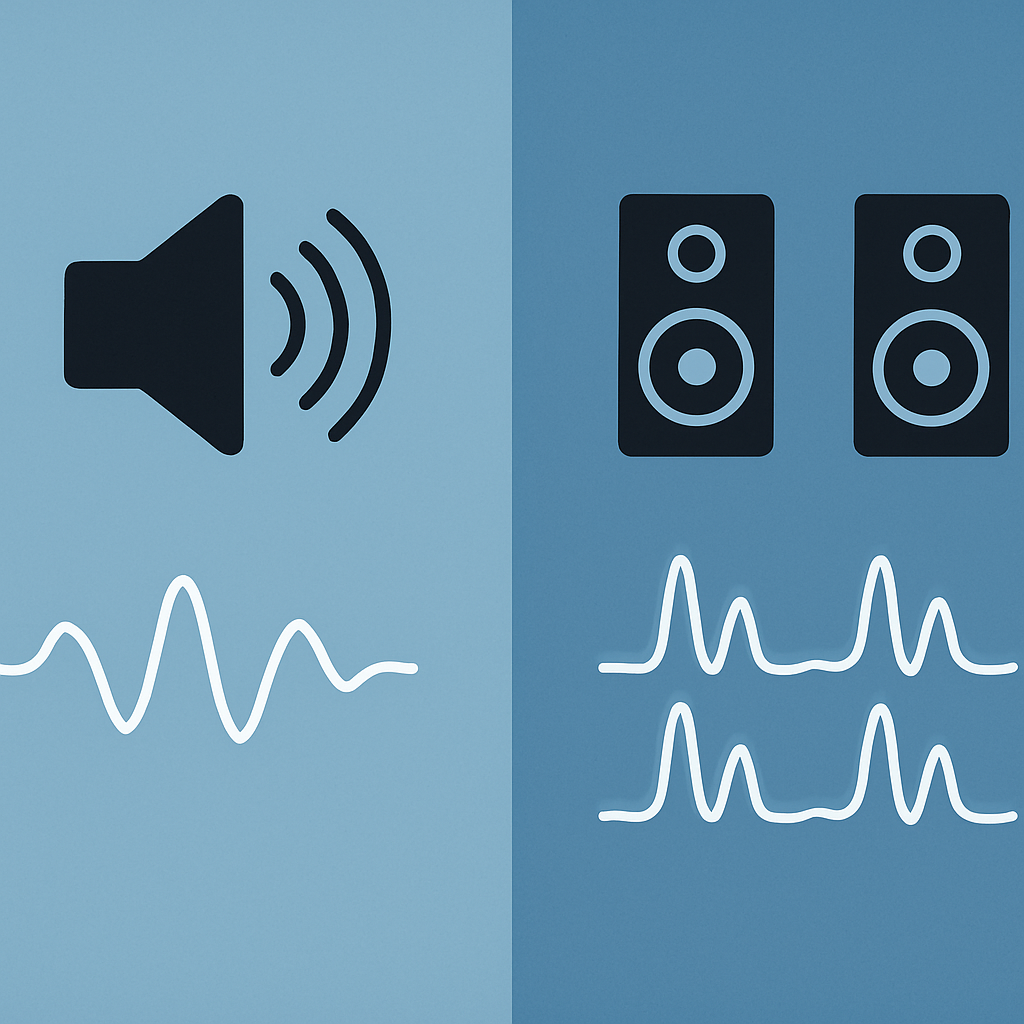
One-Channel Mono vs. Two-Channel Stereo
Mono vs. Stereo: Understanding the Essentials
Whether you’re working with music, podcasts, films, or everyday sound systems, the choice between mono and stereo shapes how your audio is experienced. In modern music production, stereo has become the standard—almost all commercially released music today is mixed and delivered in stereo. However, knowing what mono is (and why it still has uses) will help you make informed production choices. Let’s break down what these terms mean, where they came from, and how to decide between them.
The Short Answer
Mono is a single-channel format that keeps all sound in one focused spot, making it simple and consistent—helpful in certain situations like speech, live events, or lo-fi/vintage effects. In contrast, stereo uses two channels (left and right) to create space, depth, and direction, and is the format listeners expect for nearly all modern music, film, and games.
What Are Mono and Stereo—and Why Do They Matter?
Originally, all recorded and broadcast sound was mono. Engineers began adopting stereo recording in the late 1950s and 1960s, using it to mimic how human ears hear from two points and create a more lifelike listening experience. Over time, stereo became the default for music and entertainment, especially as home hi-fi systems, headphones, and later digital formats supported it. Today, stereo dominates most playback systems, yet mono remains relevant in specific use cases where simplicity and clarity outweigh spatial effects.
Mono: One Unified Channel
Mono, short for monophonic, uses a single audio channel. Every speaker in your setup—whether there’s one or several—plays exactly the same audio. Imagine a crowd all chanting the same thing at once: you hear the message clearly, but you won’t know where in the crowd it’s coming from. The audio industry once treated mono as the standard, but today producers mostly choose it for speech, reliability in unpredictable playback situations, or artistic effect.
Stereo: Creating Space Through Two Channels
Stereo uses two channels, left and right, to create a sense of direction and spaciousness. Think of stereo like standing between two conversationalists—you can tell who’s speaking from which side. This adds realism and movement, making stereo ideal for music, movies, and games. Because this format is so ingrained in listener expectations, producing music in mono today often feels flat or “narrow” to modern ears unless it’s done intentionally for style.
The Bigger Picture
Choosing between mono and stereo isn’t about which one is “better” in all cases—it’s about the listener’s context. For music and immersive media, stereo is overwhelmingly the norm. Mono still plays an important role in specific scenarios, although it’s no longer the default for general listening.
How Mono and Stereo Work
Mono in Practice: One Channel, Everywhere
With mono, all sounds—voices, instruments, effects—blend into one channel. No matter how many speakers you use, each plays the same mix. This makes mono easy to manage and immune to certain stereo playback issues. Historically, mono was common in PA systems, AM radio, and early vinyl records. Today, you’ll find it in situations where uniform coverage is essential, such as large venues, older devices, or certain broadcast formats.
Stereo in Practice: Left, Right, and Everything In Between
Stereo splits sound into two channels, allowing different elements to be placed across the left–right field. Engineers use “panning” to position instruments, creating a soundstage that feels more like natural hearing. In music production, stereo mixes can range from subtle width to dramatic, ear-catching effects. Because almost all consumer playback systems are stereo-capable, this is the expected experience for modern audiences.
Similarly, you’ll often find that engineers build most stereo mixes from many mono-recorded tracks. For example, they record a lead vocal with a single microphone in mono, track the bass guitar in mono for solidity, and capture close-miked drums (kick, snare, toms) in mono as well. During mixing, they position these mono elements within the stereo field—placing vocals in the center, hi-hats slightly to one side, guitars panned left and right, and so on. In this way, engineers create a stereo final product from mono sources carefully arranged for the listener’s experience.
Comparing Mono and Stereo: The Core Differences
Number of Channels
Mono uses one channel for a centered, consistent sound. Stereo uses two, unlocking creative possibilities with a wider, more dynamic palette.
Sense of Space and Direction
Mono delivers a straightforward, “in-front” sound. Stereo places you inside the sound field, allowing music and effects to move around you for a more engaging experience.
Equipment and Playback Compatibility
Mono works on any device, old or new. Stereo requires two functioning speakers or headphones to fully deliver its spatial effects, though most modern devices support this without issue.
The Listener’s Experience
- Stereo: Immersion, width, realism—industry standard for music and entertainment.
- Mono: Uniform clarity—best for speech, large spaces, or stylistic choices.
Technical Considerations and Challenges
Stereo can introduce “phase issues” if the two channels aren’t perfectly aligned, which can cause sounds to weaken or disappear in mono playback. This is why pros still check their mixes in mono: it ensures crucial elements remain audible no matter how they’re played back.
Choosing the Right Format: When to Use Mono or Stereo
Mono: When Simplicity and Clarity Reign
Choose mono for speech-first content, predictable clarity, or when playback equipment is uncertain. It’s also used for deliberate vintage or lo-fi aesthetics.
- Emergency announcements
- Dialogue-based podcasts
- Solo vocals with one mic
- Retro music styles or effects
Stereo: For Immersion and Expression
For almost all modern music production, stereo is the default. It’s also ideal for film, games, and other media where spatial realism matters. Listeners expect this format, so using mono for music should be a conscious stylistic decision rather than the norm.
- Music recording and production
- Film and TV soundtracks
- Games and virtual reality
Pros and Cons: Weighing Your Options
Mono
- Advantages: Simple, reliable, universally compatible, clear for speech, smaller file sizes.
- Limitations: Lacks width and spatial effects, less engaging for modern music, limited creative flexibility.
Stereo
- Advantages: Wide, immersive, realistic, ideal for modern media.
- Limitations: Needs proper playback setup, potential phase issues, more complex to mix.
Practical Audio Mixing: Bridging Mono and Stereo
Even in today’s stereo-first world, great mixes consider both. Professionals often keep bass, kick, and lead vocals in mono for strength, while spreading other elements in stereo for depth. Always check how your stereo mix sounds in mono so nothing important disappears.
Where Audio Is Headed: Looking Beyond Mono and Stereo
New formats like binaural audio and Dolby Atmos expand what’s possible. Still, mono and stereo remain the bedrock of audio production, and mastering them will prepare you for whatever’s next.
Summary: What Should You Take Away?
Stereo is the modern standard for music and entertainment, delivering width, movement, and realism. Mono still has niche uses for speech, reliability, and style, but it’s no longer the go-to for general listening. By understanding both, you can ensure your productions meet listener expectations while staying clear and consistent on any system.