LEWITT LCT 540 S Large-Diaphragm Studio Condenser Microphone


LEWITT LCT 540 S Review: Is This Ultra-Quiet Microphone Right for Your Studio?
Finding the right microphone for your studio can shape the character of your recordings and the ease of your workflow. If transparency and low noise are your top priorities, the LEWITT LCT 540 S (see current price) is a standout contender in the world of large-diaphragm condenser microphones under $1000.
But is it the ideal fit for your needs, or would your studio benefit more from something with a bit more “flavor”? Let’s explore how the 540 S performs in real-world environments, what sets it apart, and who will benefit most from its unique strengths.
Understanding the LCT 540 S: What Makes It Special?
The LEWITT LCT 540 S takes an uncompromising approach to capturing sound—aiming for maximum transparency and virtually eliminating self-noise. Self-noise (the noise created by the microphone itself) can become a limiting factor in high-end recording scenarios. If you’re curious about what self-noise is, how it’s measured, and why it matters in critical recording situations, this comprehensive guide to microphone self-noise breaks down the concept in detail and explains its impact on recording quality. With the LCT 540 S, this aspect is addressed at a level that distinguishes it from most competitors.
Not everyone needs this level of precision. While engineers and studios working on detailed, critical recordings may find the ultra-clean sound invaluable, those who prefer a microphone that adds color, warmth, or vintage personality might find the 540 S less inspiring. In short, this is a microphone for creators who value fidelity over character—where the goal is to capture every nuance without imposing an audible fingerprint of its own.
About LEWITT: A Modern Approach to Microphones
Based in Austria and founded in 2010, LEWITT has earned a name among audio professionals for its clean, contemporary designs and technical reliability. The LCT 540 S epitomizes these values, standing as the company’s flagship for ultra-low noise performance. In practical terms, its self-noise rating of just 3 dBA is so low that the subtle sounds of your recording space—or even your own breath—are often more audible than any electronic hiss from the mic itself.
This makes the 540 S particularly suited to situations where noise buildup from layering tracks or heavy processing can quickly degrade audio quality. For home studios and professionals alike, that level of quietness is an invaluable asset. If you’re looking for studio microphones that offer similar reliable performance but with a different sound character, you might also want to consider the Audio-Technica AT4040.
Build Quality and Included Accessories
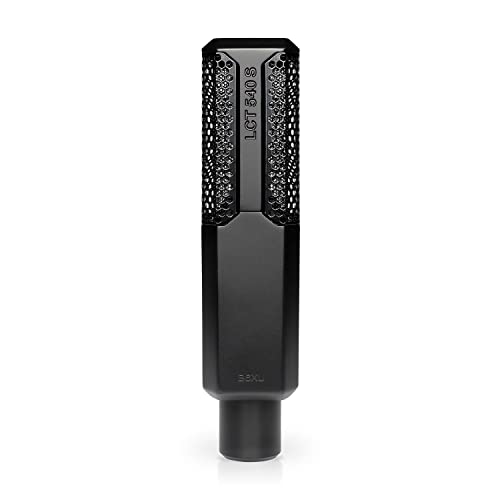
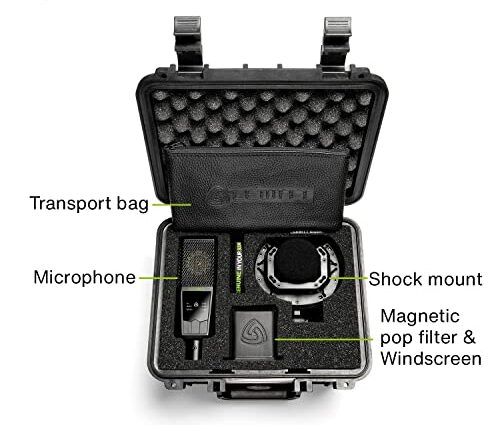
Physical reliability is just as important as sound quality in the studio, and LEWITT delivers here as well. The LCT 540 S is noticeably solid and on the heavier side compared to many desktop microphones, reflecting its professional focus. The robust enclosure, matte finish, and precisely engineered angles all point towards long-term durability. LEWITT includes a full suite of essential accessories—a shockmount, windscreen, detachable magnetic pop filter, and a tough carrying case—offering a complete package out of the box.
Key Specifications and Features
Let’s take a closer look at what’s under the hood, and how those features translate to everyday use.
- Microphone Type: 1″ externally polarized large-diaphragm condenser
- Polar Pattern: Cardioid
- Frequency Response: 20 Hz–20 kHz (linear for transparent sound)
- Maximum SPL: 136 dB (up to 149 dB with -12 dB pad)
- Self-Noise: 3 dBA—virtually inaudible in most contexts
- Impedance: 68 Ω
- Connection: Standard XLR, requires 48V phantom power
- Low-Cut Filters: Selectable at 80 Hz or 160 Hz (excellent for controlling rumble or low-frequency noise)
- Pads: -6 dB or -12 dB options for managing louder sources without clipping
The thoughtful inclusion of low-cut filters and pad switches makes it easy to tailor the LCT 540 S to a range of studio scenarios—from isolating a quiet classical instrument to handling a close-miked guitar amp.
How Does It Sound? Performance and Real-World Use
The true test of a studio microphone lies in its day-to-day performance. The LCT 540 S’s defining trait is its neutrality. Vocals, strings, acoustic guitars, and other detailed sound sources are rendered with absolute fidelity; the mic doesn’t flatter or enhance, it simply reveals. For engineers aiming to capture a “reference” track, or for producers who intend to shape and color the sound in post-production, this transparency is exactly what many projects demand.
Where the ultra-low self-noise becomes particularly apparent is when you record quiet or distant sources, stack multiple tracks, or run heavy EQ and compression after recording. Whereas “ordinary” condensers may start to inject hiss or grain into these processed signals, the 540 S maintains a pristine, uncolored signal—allowing for aggressive editing without quality loss.
It’s important to note, however, that this approach isn’t for everyone. If you want your microphone to supply a dose of character, warmth, or “vintage” richness, there are better choices. The LCT 540 S is about fidelity and technical excellence—not about imparting its own sonic stamp.
Practical Limitations: Pickup Pattern and Versatility
Staying focused on transparency, the LCT 540 S employs a single cardioid polar pattern. This makes it superb for isolated sources—such as vocals or close-miked instruments—but less versatile for stereo techniques or complex ambient room captures. The onboard low-cut and pad functions do provide adaptability for different sound sources and volumes, but if you regularly need multi-pattern capabilities (like omni or figure-8), you may prefer alternatives that offer more flexibility.
How the LCT 540 S Compares to Other Studio Classics
Choosing a premium microphone inevitably leads to comparisons with established favorites. At this price point, the LEWITT LCT 540 S is most frequently set against the Neumann TLM 103, Neumann TLM 102, and Audio-Technica AT4050.
The TLM 103, also known for low self-noise (7 dBA), can’t match the 540 S’s ultra-quiet background. The TLM 102 is appreciated for its vocal-friendly tone and strong brand pedigree. The AT4050 is often selected for its multiple polar patterns and sonic flexibility, but its self-noise (12–17 dBA) is considerably higher depending on the chosen setting.
For users seeking ultimate noise performance and transparency, the LCT 540 S holds a clear advantage—but if you value brand familiarity or multi-pattern recording options, the other models may be more appealing. If you’re exploring more transparent condenser microphones in a similar price range, the Audio-Technica AT4040 is also worth a look.
Advantages and Factors to Consider
The LCT 540 S brings unique strengths, but also some practical trade-offs:
- Key Advantages:
- Ultra-low self-noise: Environmental room noise will dominate before the microphone itself does
- Superb transparency and accuracy—ideal for mixing, mastering, or nuanced recording applications
- Reliable construction and comprehensive bundled accessories
- Pad and low-cut filter switching gives flexibility for different recording situations
- Considerations:
- No built-in tonal character—sound is intentionally neutral
- Single (cardioid) pickup pattern
- Larger and heavier than some competitors—may require a sturdy stand
- Picks up more room/environmental noise in untreated spaces
- Competes in a price tier popularized by major legacy brands
Who Is (and Isn’t) the 540 S Ideal For?
All these factors combine to make the LCT 540 S a remarkably precise and revealing tool—but best suited to certain users and environments.
- Best for:
- Audio engineers prioritizing pure, reference-grade recordings—such as for classical, acoustic, Foley, or broadcast voiceover
- Studio owners and producers who want to minimize noise from the very source
- Anyone layering many tracks or doing aggressive dynamic processing who needs a clean signal base
- Those seeking an honest “yardstick” microphone to judge and refine their space and setup
- Not ideal for:
- Causal users, hobbyists, or beginners working in untreated home studios, where the mic’s sensitivity may reveal unwanted background
- Anyone seeking “vintage” color or strong sonic personality from their microphone
- Those who frequently rely on multi-pattern recording options
Final Thoughts: Should You Invest in the LEWITT LCT 540 S?
In summary, the LEWITT LCT 540 S stands as one of the quietest and most sonically accurate condensers in its class. If your aim is to capture audio as cleanly and transparently as possible—and if your recording environment allows you to take advantage of this technical excellence—it is a compelling investment. For engineers and producers demanding maximal detail, low noise, and reliability, the LCT 540 S won’t disappoint.
On the other hand, if you’re seeking a signature sound, or you’re recording in less-than-ideal acoustic spaces, you may find more satisfaction (and value) in alternatives designed for color or greater versatility. Ultimately, the LCT 540 S is a dedicated tool: when transparency is your highest priority, it delivers with assurance and authority.