
Question: “I’m looking for a new microphone, and I keep hearing condenser microphones are ‘better.’ But what’s even the difference between dynamic and condenser microphones?”
Walk into any music store, or watch any “home studio setup” video, and you’ll hear the same rule: condensers are studio mics, dynamics are for the stage. So if you’re building a studio, you buy a condenser. Right?
Not so fast. That rule was written for studios with treated rooms, and most of us record in a bedroom with a computer humming under the desk and a street outside the window. Which mic you should buy first has less to do with the mic than with the room you put it in. To see why, start with how each one hears.
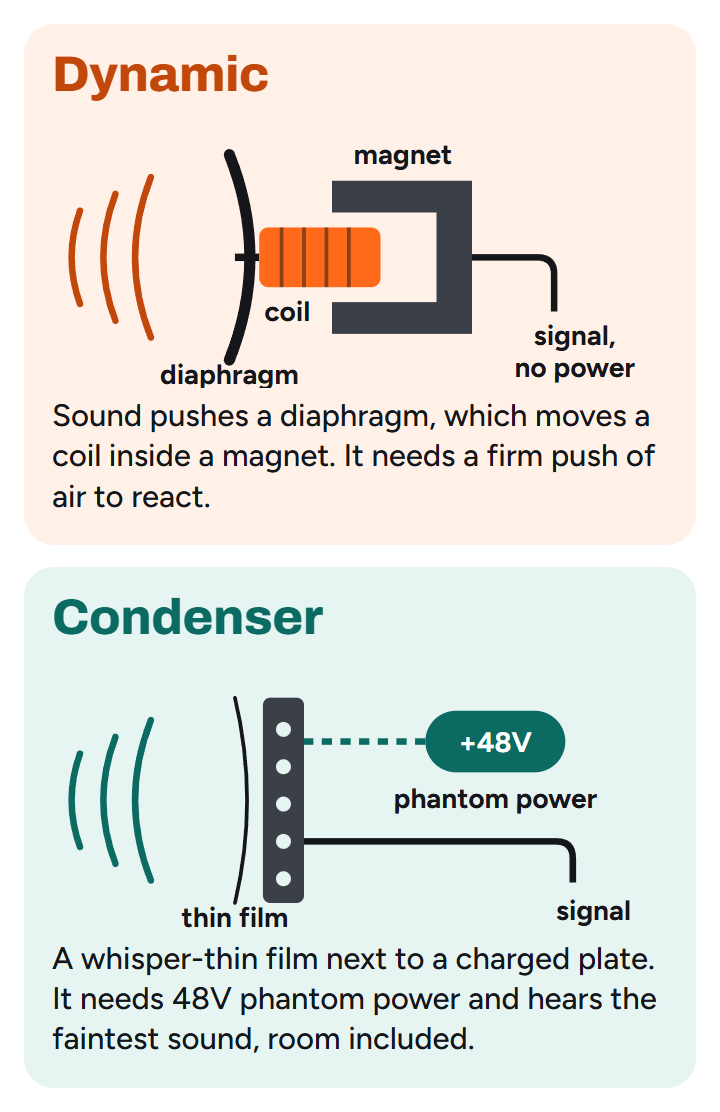
How a dynamic mic hears
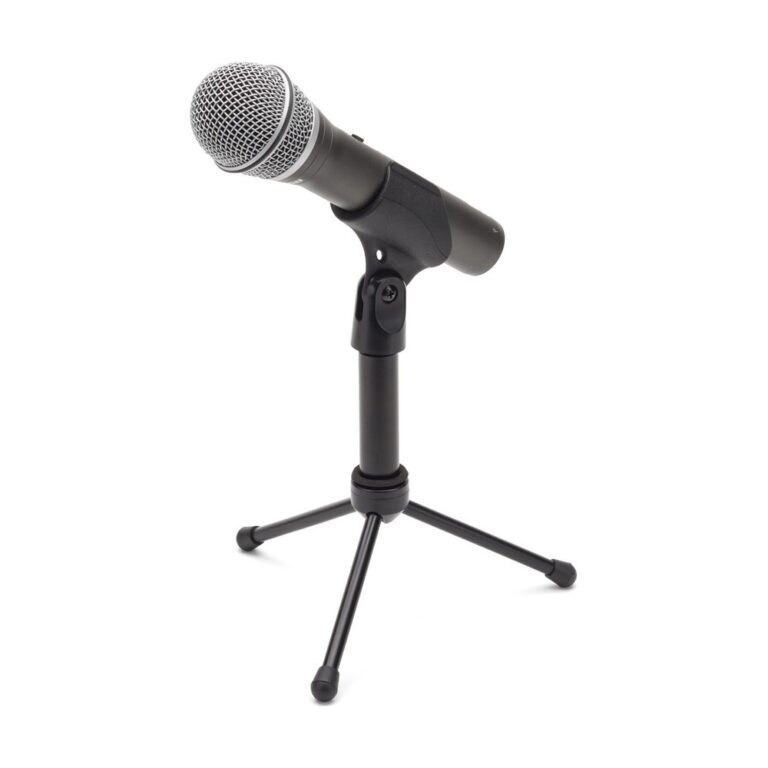
A dynamic mic is beautifully simple. Inside is a thin diaphragm attached to a coil of wire that sits around a magnet. Your voice pushes the diaphragm, the coil moves through the magnetic field, and that movement makes a small electrical signal. No batteries, no power, nothing to switch on. It’s a speaker working in reverse.
That diaphragm and coil have some weight to them, so a dynamic mic needs a decent push of air to react. Loud, close sounds come through clearly. Quiet, distant ones barely register. Hold on to that, because it’s the whole story in a bedroom.
Dynamics are also tough. A Shure SM58 is famous for surviving years of being dropped on stages, and that toughness is why dynamics rule live sound. It’s also why they take loud sources like guitar amps and snare drums in their stride.
How a condenser mic hears
A condenser works differently. Its diaphragm is a whisper-thin film sitting a hair’s width from a metal plate, and together the two form a capacitor (which used to be called a condenser, hence the name). When sound moves the film, the gap between film and plate changes, and that change becomes the signal.
The film weighs almost nothing, so it reacts to almost everything: the breath before a line, the fine detail of acoustic guitar strings, the “air” at the top of a voice. It also needs power to run, usually 48 volts sent up the cable from your audio interface. That’s called phantom power.
So yes, a condenser hears more. That’s the part the store gets right. What it leaves out is that it hears more of everything.
What that means in a bedroom
Picture your room. Flat walls, a window, a desk, a computer under it. When you sing, your voice doesn’t only travel into the mic. It also hits the walls and comes back a few thousandths of a second later. In a treated studio, panels soak up most of that bounce. In a bedroom, it comes straight back into the mic and smears itself over your vocal.
A dynamic mic used up close mostly ignores it. Your voice, a few inches away, is far louder at the mic than anything bouncing off a wall, and the dynamic’s heavier diaphragm doesn’t bother much with the quieter, distant stuff. You get more of you and less of your room. Up close you also get a little extra bass, called the proximity effect, which can make a voice sound fuller (or boomy, if you lean in too far).
Which one should you buy first?
Here’s the honest answer for most people reading this from a bedroom: buy a dynamic mic first.
Not because dynamics sound better. In a great room, a good condenser captures more detail and more air. That’s exactly the problem. Your room isn’t a great room. A condenser hears the bare walls, the hum of your computer and the car going past outside, and it records all of it right along with your voice. You can’t EQ that out later. You can try. It doesn’t work.
A dynamic mic like the Shure SM58 wants you close, about a fist away, and in return it mostly ignores everything else. It’s forgiving in exactly the places a home studio isn’t.
So when is the condenser the right call? When your room is quiet and you’ve done something about the reflections (a few panels, or even a thick duvet hung behind you), or when you’re recording an acoustic guitar or a soft voice that needs the detail. Then a condenser like the Audio-Technica AT2020 is the better mic for the job.
Is a condenser “better”? NO. It’s more sensitive. In the wrong room, that’s the opposite of better.
Which mic for which job
Rap and loud vocals: dynamic. You’re close and you’re loud, which is exactly what a dynamic loves, and it keeps the room out of your takes.
Singing in an ordinary room: dynamic, worked close. Ease back a little on the big notes.
Singing in a quiet, treated room: condenser. This is where condensers earn their reputation, with more detail and more of the voice.
Acoustic guitar: condenser, in the quietest room you have. The sparkle of the strings is what a condenser does best.
Guitar amps and drums: dynamic. They’re loud and they don’t need delicacy. The SM58’s sibling, the SM57, is the classic choice here.
Podcasts and streaming: dynamic. Speech, up close, in an ordinary room is dynamic territory.
Our dynamic pick: Shure SM58
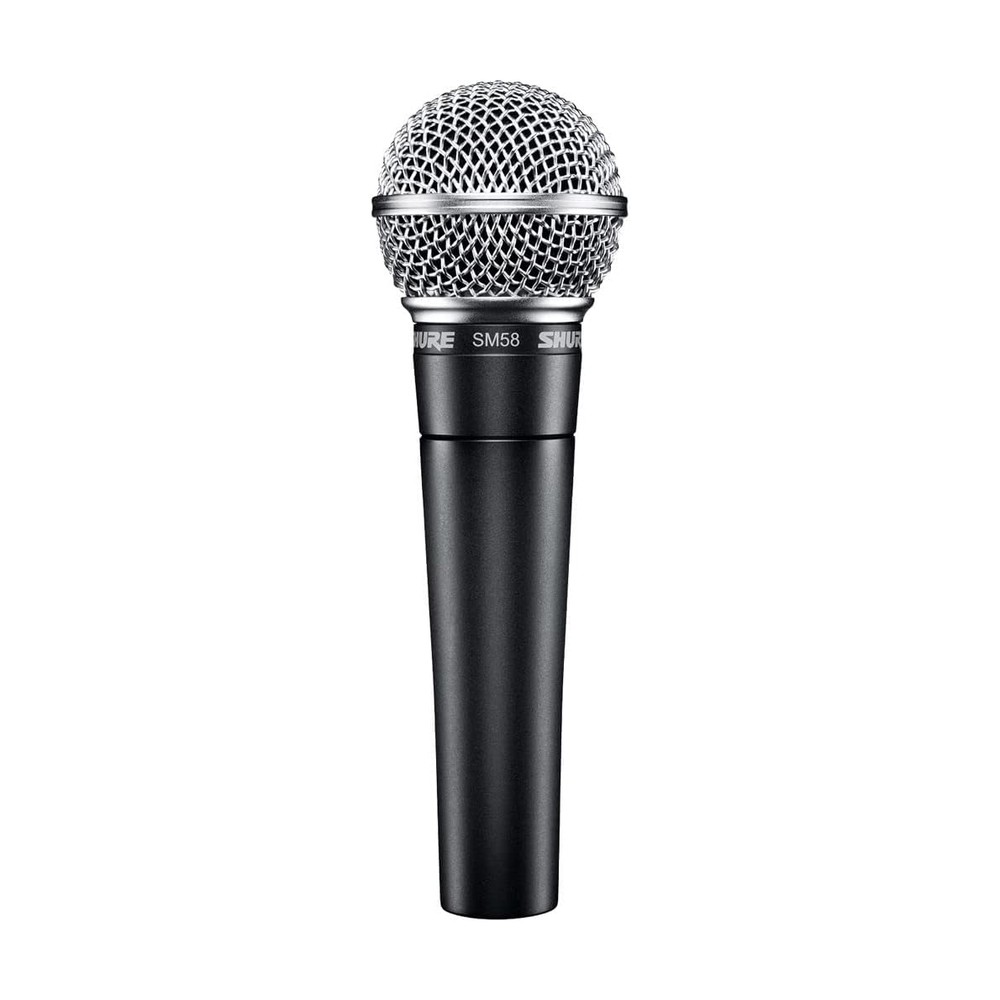
The SM58 has been the default vocal mic for decades, and it’s still the one we’d hand a beginner. It’s affordable, it’s nearly indestructible, and the ball-shaped grille has a pop filter built in, so it’s ready the moment you plug it in.
The catch: it isn’t a detailed mic. Next to a good condenser, an SM58 sounds a little closed-in at the top, without that airy shimmer. It also needs a fair amount of gain, so keep it close and don’t be surprised when you turn your interface’s input knob further than you expected.
But in a bedroom, that closed-in top is part of why it works. It’s the best place for most people to start, and it stays useful long after you’ve bought fancier mics.
Our condenser pick: Audio-Technica AT2020
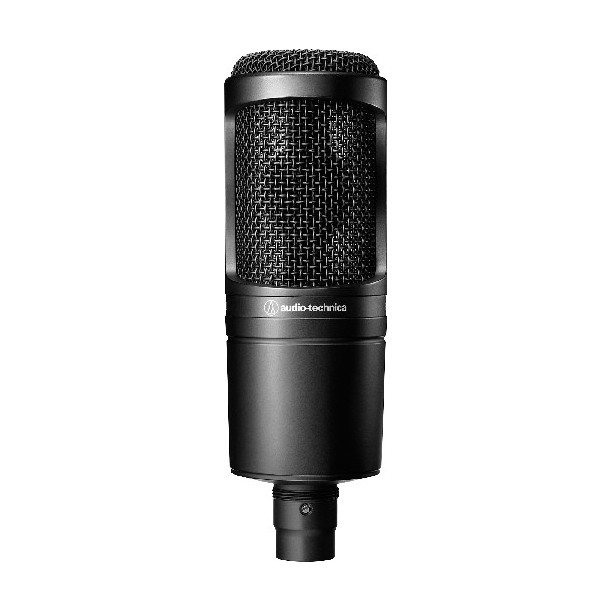
If your room is quiet, or you mostly record acoustic guitar, the AT2020 is the condenser we’d start with. It’s clear and fairly neutral, it doesn’t hype the top end the way many cheap condensers do, and it’s priced like a first mic should be.
The catch: it needs phantom power, so you’ll need an audio interface to run it, and it needs a pop filter for vocals. It will also show you every flaw in your room, honestly and without mercy.
Put it in a decent space, though, and it’s a clear step up in detail over any dynamic. If you’d like to see what a little more buys, our guide to the best condenser mics at every price picks one for every budget.
Getting a good take from either one
Whichever you buy, a few habits matter more than the mic itself.
Distance. With a dynamic, stay about a fist away and keep it there. Drift back to arm’s length and your voice drops while the room creeps in. With a condenser, start a hand’s width or two away, behind a pop filter, and move closer or further until the voice sounds full without getting boomy.
Aim. Both of our picks are cardioid, which means they hear best from the front and least from directly behind. Point the back of the mic at whatever you don’t want: the computer, the window, the door.
Level. Set your interface’s input so your loudest line peaks well below the top of the meter. Too low is easy to fix later. Too loud and clipped is ruined for good.
Mounting. A condenser on a desk stand picks up every tap on the desk and every footstep. A floor stand, ideally with a shock mount, keeps those thumps out of your recording.
And yes, there’s a third kind of mic, the ribbon. Ribbons are smooth, delicate and wonderful on the right source (see our AEA KU4 review), but they’re not where a first studio starts.
When you’re ready for more
There’s plenty further up the ladder. Our reviews of the Audio-Technica AT4040 and the Neumann TLM 103 cover two condensers worth saving for, and if you’ve wondered why some mics sound warmer than others, see colored vs transparent microphones.
Whichever mic you buy, start with the room. A few panels behind you will do more for a condenser than another hundred dollars spent on the mic, and moving your furniture around costs nothing at all.
Happy producing.
Awesome writeup. Keep this spped up. Love it.