Sooner or later, every home studio wants a condenser mic. It’s the mic that catches the breath before a line, the pick brushing a string and the air around a voice, the detail you hear on records and miss on your own recordings.
The trouble is choosing one. Condensers run from under $100 to well past $3,000, and spending more doesn’t always get you a better mic for a home studio. So this guide works up through the prices instead: the best condenser mic at each step from under $100 to under $1,000, and an honest word on what each one can’t do.
Do you even need a condenser?
Before you spend a dollar here, be honest about your room. A condenser hears everything: your voice, the walls it bounces off, the fan in your computer, the car outside. In a quiet room with a little treatment, that sensitivity is exactly what you’re paying for. In an untreated bedroom, it’s a liability.
If you haven’t read it yet, start with our dynamic vs condenser guide. If your room is loud, a dynamic mic will make better recordings than any condenser on this list.
Still here? Good. Your room is quiet, or you’re about to make it quieter, and you want the detail only a condenser gives. Here’s the best one at every price.
The picks at a glance
| Budget | Our pick | Price | Best for | The catch |
|---|---|---|---|---|
| Under $100 | MXL 990 | $89.95 | A first condenser on a tight budget | More hiss than the rest |
| Under $200 | RØDE NT1 Signature Series | $159 | Most people | A bright top end |
| Under $300 | Lewitt LCT 440 PURE | $249 | An open, airy sound | Not clearly better than the RØDE |
| Under $500 | Audio-Technica AT4040 | $329 | A mic that does more jobs and lasts | Uneven treble |
| Under $1,000 | Warm Audio WA-87 R2 | $649 | The classic studio vocal sound | Big, heavy and bright |
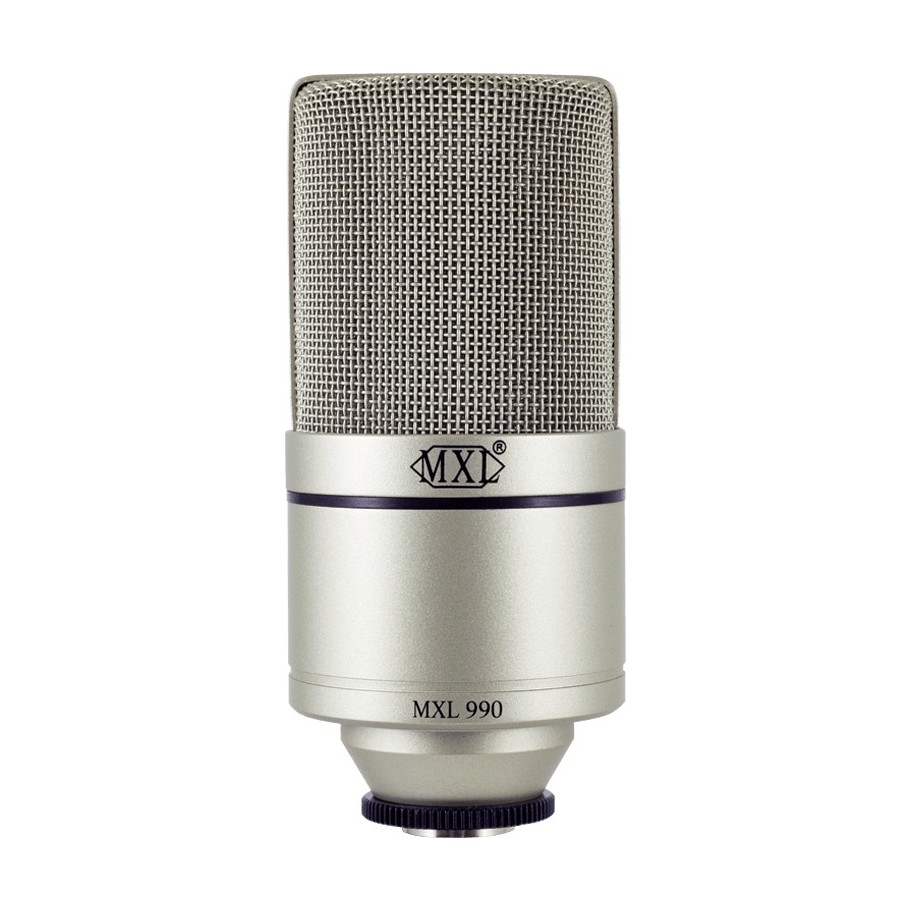
Best Condenser Mic Under $100: MXL 990
Check the price on Amazon $89.95 when we checked
Here’s the thing about condensers under $100: they sound a lot alike. Sound On Sound said as much when it reviewed the MXL 990, noting “lots of similar-sounding mics at a similar price”. So you want the one that gets the basics right and comes with what you need, and that’s the 990.
Sound On Sound found it “subjectively neutral and nicely balanced” with “just a hint of high-end sizzle”, which on most voices comes across as clarity. And unlike most mics at this price, it comes with a shock mount and a case.
The catch is hiss. Every condenser makes a faint hiss of its own, called self-noise, and the 990’s is on the high side. Sound On Sound called it “more than adequate for close-miking vocals”, and that’s the honest summary: sing close and you’ll never notice it, but record a soft voice from a foot away with the gain turned right up, and you will. There’s no pad or low-cut switch, either.
Still, under $100 it’s the one to get. Just know that the next step up is a big one: for about $70 more, the RØDE below is far quieter and comes with everything.
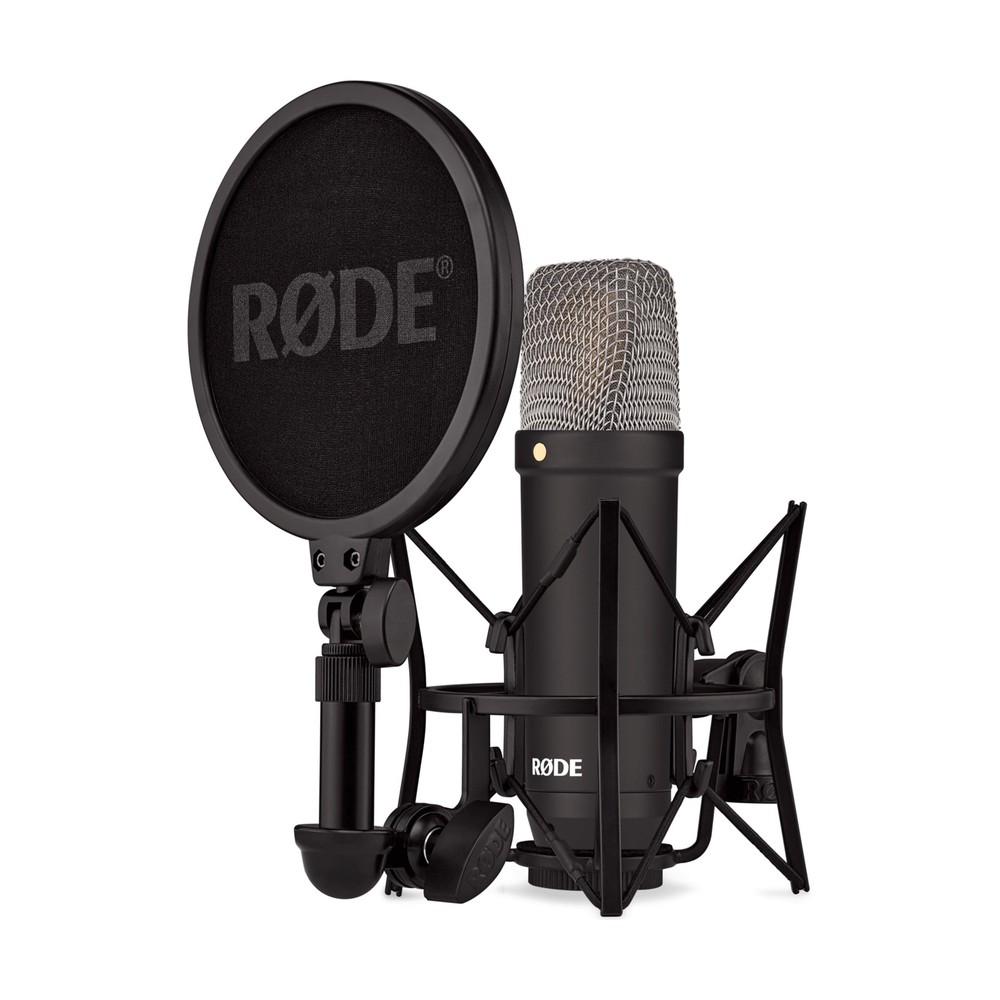
Best Condenser Mic Under $200: RØDE NT1 Signature Series
Check the price on Amazon $159 at RØDE’s US store when we checked
This is the one we’d tell most people to buy. The NT1 has been RØDE’s home-studio condenser for years, and the Signature Series is the plain XLR version at a much lower price. What makes it special is how quiet it is. Its self-noise is 4 dB-A, against 20 for the MXL 990, which makes it quieter than mics costing several times as much. Sound On Sound called that “very impressive” and the mic “exceptional value for money”, and MusicTech gave it 10 out of 10.
In practice, quiet means you can record a soft vocal or a fingerpicked guitar from a natural distance, turn the gain up, and still hear the performance rather than the mic. And the shock mount, pop filter and XLR cable come in the box, so there’s nothing else to buy.
The catch is a bright top end. MusicTech heard more treble than on classic studio mics, and Sound On Sound found the mids a little pinched on loud vocals next to an expensive valve mic. If your voice already has sharp “s” sounds, plan on a de-esser. There’s no pad or low-cut switch.
None of that changes the verdict: nothing under $200 gives you this much. You’ll also see the Audio-Technica AT2020 ($118) recommended everywhere, and it’s a good mic: when Tape Op’s reviewers compared it with other mics without knowing which was which, they kept picking it. But its self-noise is 20 dB-A against the RØDE’s 4, and it comes without a shock mount or pop filter, so the RØDE is worth the extra $40. No audio interface yet? The NT1 5th Gen is the same mic with a USB-C connection as well, for a little more. Our USB vs XLR guide explains the trade.
Best Condenser Mic Under $300: Lewitt LCT 440 PURE
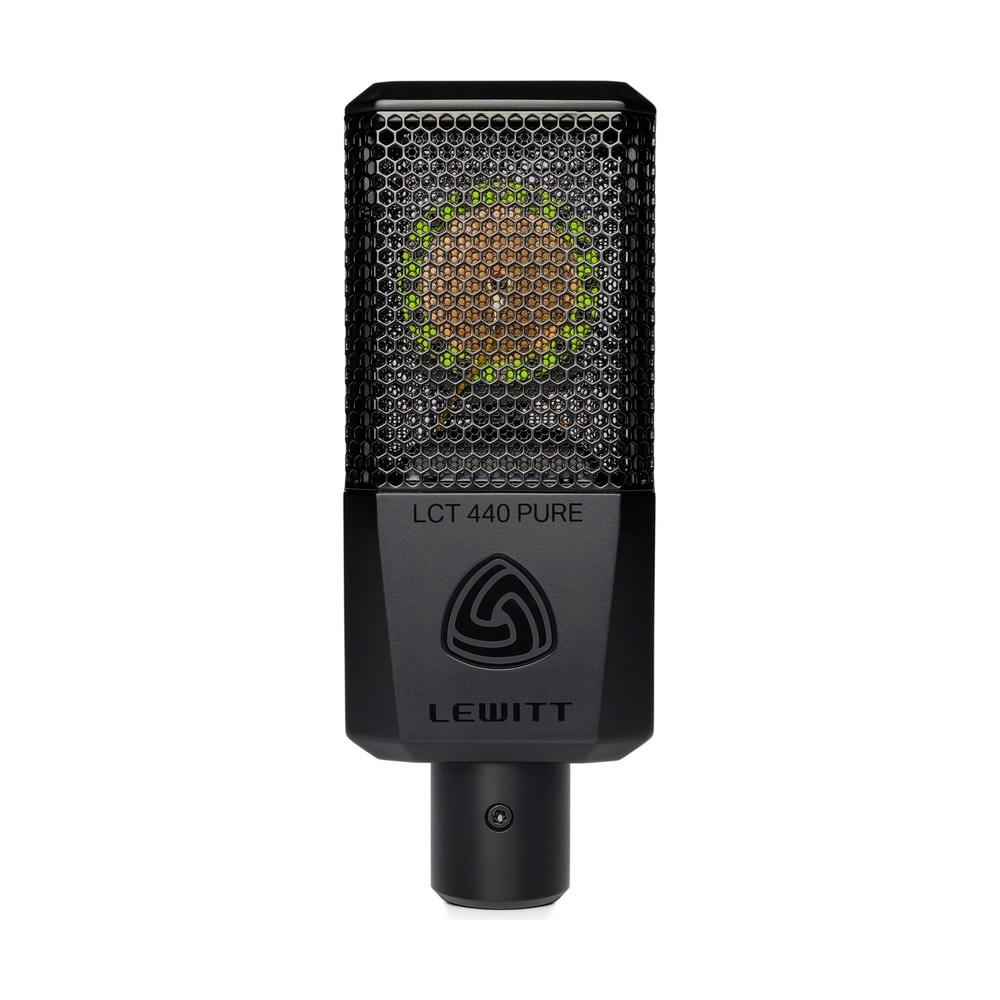
Check the price on Amazon $249 when we checked
Here’s the honest bit: we couldn’t find a mic between $200 and $300 that clearly beats the RØDE for less. If you came here with $300, you can spend less and put the rest toward a stand and some acoustic panels.
If you’d rather spend it on the mic, though, make it the LCT 440 PURE. Sound On Sound praised its “great sound quality” and found it as good on instruments as on voice, with a sound on the airy side of neutral. It’s very quiet too, and Lewitt includes a shock mount and a magnetic pop filter.
The catch: if your voice is already bright, that airy top adds more, there’s no pad or low-cut switch, and on paper it’s slightly noisier than the cheaper RØDE (both are very quiet). Buy it because you prefer its open sound, not because it costs more.
Best Condenser Mic Under $500: Audio-Technica AT4040
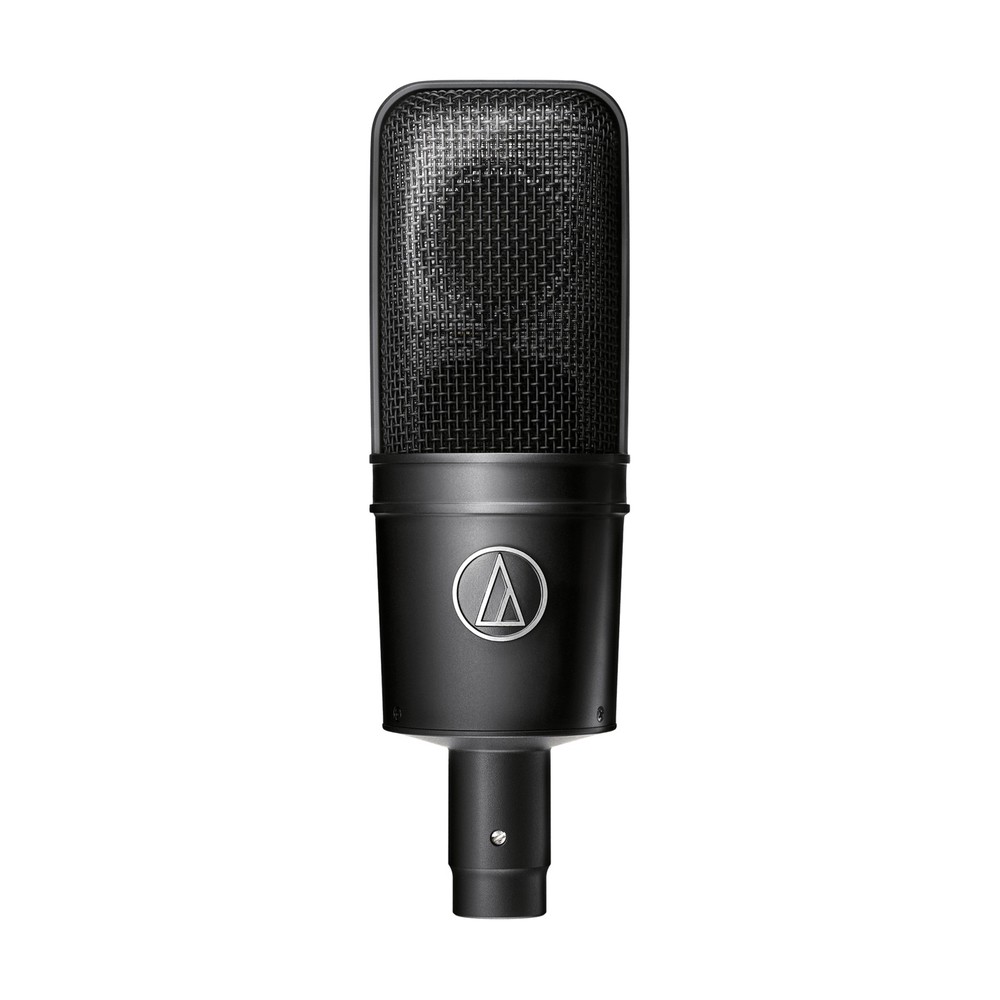
Check the price on Amazon $329 when we checked
Above $300, the question changes. Every mic from here up is quiet enough; what you’re paying for now is a mic that handles more jobs and lasts. The AT4040 does both. Sound On Sound called it “an excellent, well-specified and well-equipped microphone” that “compares very favourably with its competition”, and our own AT4040 review called it a mic that punches above its price.
“Well-equipped” is the point. It has a pad for loud sources like guitar amps and drums, a low-cut switch for rumble, and a proper shock mount in the box.
The catch is in the treble. Its published response has peaks around 6.5 and 11 kHz, which Sound On Sound listed as its only con, and on a voice that’s already sharp they can tip into harsh. It’s cardioid only, too.
At $329, it’s the safe choice that lasts. If you want more than one pattern, the Aston Spirit adds omni and figure-8, and Sound On Sound “really couldn’t find much not to like” in it. It’s harder to find in stock, though, and its shock mount costs extra.
Best Condenser Mic Under $1,000: Warm Audio WA-87 R2
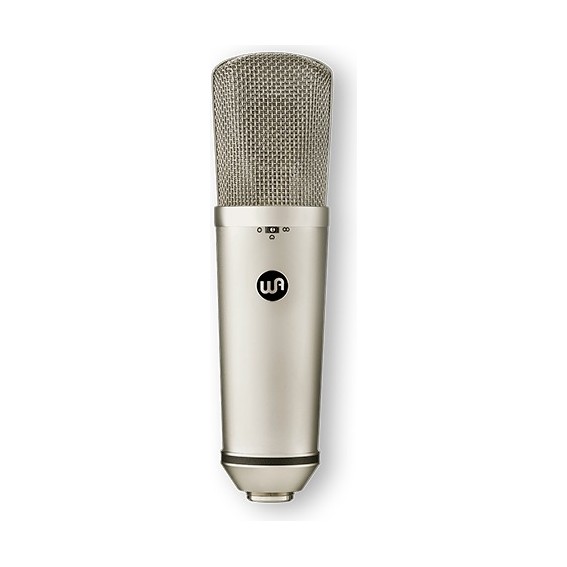
Check the price on Amazon $649 when we checked
The Neumann U 87 is the mic you’ve seen in more vocal booths than any other, and it costs more than most people’s entire home studio. The WA-87 R2 is Warm Audio’s take on it. Sound On Sound put one next to the reviewer’s own 1971 U 87 and called the two “spookily similar”, with the Warm Audio “a little brighter and more modern-sounding”. Under cons, the review listed one word: “None”.
You get three patterns, a pad and a low-cut filter, so it handles a whisper, a screaming guitar amp or a room full of people. A shock mount, a fixed mount and a wooden case come with it. That’s what makes it a mic you keep for good rather than one you outgrow.
The catches: it’s big (Sound On Sound’s dwarfed the original U 87) and heavy, so it wants a sturdy stand, and that brighter top shows off a sibilant voice. And like any mic at this level, it rewards a treated room. Put it in a bare bedroom and you’re paying for detail you’ll spend your time removing.
If your room is ready, it’s the best value under $1,000. If you only ever record one voice and want the quietest mic you can get, look at the Lewitt LCT 540 S, which is extremely quiet with a natural sound, though cardioid only. Our LCT 540 S review goes into detail.
What to buy with it
A condenser needs a little more around it than a dynamic mic, so leave some budget for it.
First, power. Every mic in this guide needs 48-volt phantom power, which almost every audio interface supplies at the press of a button. If you’re not sure what that button does, see phantom power, explained, and if you don’t have an interface yet, start with do you need an audio interface.
Then a pop filter, so your “p” and “b” sounds don’t hit the capsule as thumps, and a shock mount, so footsteps and knocks on the desk don’t travel up the stand. Most picks here come with a shock mount, and the RØDE and the Lewitt include a pop filter too. If yours doesn’t, our piece on whether you need a shock mount will help you decide.
And finally, your room. A couple of thick blankets or panels behind you will do more for a condenser recording than the step up to the next price. Our guide to recording clean audio in a noisy room has the cheap fixes.
How we picked
Microphones are hard to measure the way speakers are, so we rank on what’s published: blind listening comparisons where they exist (Tape Op’s AT2020 shootout), professional reviews (Sound On Sound, Tape Op and MusicTech), the makers’ own self-noise figures, and our own reviews. Each pick had to be in stock at a price inside its step on the day we checked. We stopped at $1,000: the Neumann TLM 103 and AKG C414 XLII we’ve reviewed now cost more than that in the US. We redo this ranking every year.
Happy producing.