
Erica Synths LXR-02 Desktop Digital Drum Synthesizer

Erica Synths LXR-02: A Deep Dive into Digital Drum Design
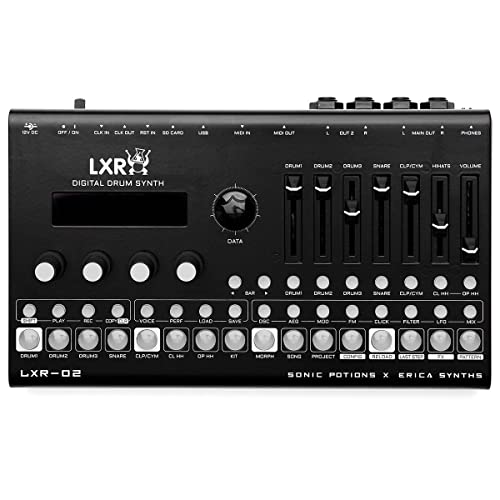
Modern drum machines come in many flavors, but few offer as much direct control over digital sound creation as the Erica Synths LXR-02 (see current price). If you’re curious about synthesizing your own drum sounds—rather than relying on preloaded samples or emulations of classic analog kits—the LXR-02 deserves a closer look. It’s a machine with a clear identity, designed specifically for those who want to dive deep into digital drum synthesis and hands-on performance.
The Story Behind the LXR-02
Understanding the LXR-02 starts with its creators. Erica Synths, hailing from Latvia, has carved out a reputation for robust, purposeful hardware—particularly in the realms of modular and desktop synthesis. The LXR-02 arrives from their collaboration with Sonic Potions, the minds behind the original LXR drum synth, which became a favorite among DIY musicians for its flexibility and depth. This partnership has yielded a drum machine aimed squarely at creative producers who value exploration over presets, updating a beloved formula for a wider audience.
Positioned between modular systems and more conventional grooveboxes, the LXR-02 aligns with musicians who want a tool for digital sound design rather than a collection of familiar sounds. Its place in the market is distinctive: neither sample playback nor analog nostalgia, but unfiltered digital possibility. For readers interested in how drum machines have evolved to reach this point in design, this history of drum machines offers valuable context on the technological milestones and innovations that paved the way for instruments like the LXR-02.
Design and Build: Practical Excellence

The physical construction of the LXR-02 reflects its purpose: serious sonic flexibility paired with portable reliability. Crafted from metal and fitted with firm, satisfying encoders and buttons, this unit is compact enough to accompany you to gigs or rehearsals without concerns about durability. While the buttons enable precise step programming, they aren’t designed for expressive, velocity-sensitive live drumming—underscoring the LXR-02’s focus on programmed rather than finger-drummed patterns.
Navigating its interface may feel complex at first, as the device strikes a balance between offering deep control and maintaining clarity. Six dedicated encoders provide immediate access to most parameters and, combined with a clear display, make detailed programming manageable. Although newcomers may find the learning curve palpable, patient users will discover an efficient, rewarding workflow that bridges step sequencing with rich sound design capabilities.
Connectivity extends this pragmatic theme. Dual stereo outputs, a headphone jack, MIDI (via adapters), USB MIDI, and four analog trigger outputs allow the LXR-02 to integrate seamlessly into both studio and live setups, including those involving Eurorack modular gear. While the absence of sampling input or audio routing means you’re confined to internal synthesis, MIDI and clock synchronization are straightforward and reliable, ensuring the LXR-02 plays well alongside a variety of hardware.
The Heart of the Machine: Digital Synthesis in Action
At its core, the LXR-02 is all about shaping sound from scratch. It features six independent drum voices, each offering digital techniques such as FM, subtractive, and noise synthesis. These engines are extensively tweakable, with a range of oscillators, envelopes, filters, built-in effects, modulation routes, and LFOs at your disposal.
This philosophy extends to processing as well. Rather than offering sample import or relying on outside material, the LXR-02 encourages users to invent and sculpt all drum sounds internally. Effects like drive, delay, and bit-crushing can be individually applied or routed globally, allowing you to emphasize clarity, edge, or raw digital character as needed.
The LXR-02’s sequencer complements its synthesis capabilities. Patterns can span up to 64 steps, with storage for 16 patterns per project. Both real-time and step programming are supported, and features such as parameter locks, pattern chaining, and song modes allow for intricate automation and dynamic performances. Mutes, fills, and accents are readily accessible for live tweaks—even if the pads remain limited to fixed velocities.
Everyday Workflow: Sound, Speed, and Studio Integration
When put to use, the LXR-02 demonstrates why its approach to digital percussion is so compelling. The sounds produced are crisp, direct, and versatile—punchy kicks, snappy snares, and inventive electronic percussion abound, making it especially suited to genres like techno, IDM, and experimental music. Its sonic identity is unashamedly digital, providing sharp impact and detail, rather than attempting to replicate the subtleties of acoustic drums or analog warmth.
Initial setup may feel daunting as you adapt to the interface, but workflow improves fluidly with practice. Pattern creation, chaining, and sound programming all become more intuitive as you internalize the controls. For those already at home with hardware sequencers, the experience feels immediate and empowering—while those seeking instant gratification or straightforward sample playback may find other options easier to master.
Studio users will appreciate the LXR-02’s integration capabilities. USB and MIDI connectivity enable DAW synchronization or sequencing, and the analog triggers unlock hybrid setups with modular synths. Although there are no audio inputs or sample memory, the device does support full MIDI mapping and automation for further creative control within your existing rig.
Strengths and Shortcomings
The LXR-02’s design decisions bring clear strengths, but also trade-offs that may shape your decision:
- Strengths: Deep and versatile digital synthesis for custom drum design; solid build quality for consistent performance; fast, flexible sequencing; broad connectivity (USB, MIDI, triggers); regular firmware updates and open-source support.
- Shortcomings: No sampling or audio input options—sound design is strictly internal; pads lack velocity sensitivity; requires a learning period to master navigation; digital sound profile that may not satisfy those seeking analog flavors; limited to six simultaneous voices.
Comparing the Competition
In the landscape of compact drum machines, the LXR-02 stands out for its pure synthesis approach. Let’s see how it situates among popular alternatives:
- Elektron Digitakt: Prioritizes sampling and offers broad sequencing features, favoring versatility in audio manipulation over in-depth synthesis.
- Roland TR-8S: Recognized for immediate access to iconic drum sounds and effortless sample import, excelling in dance and classic styles.
- Novation Circuit Rhythm: Portable and battery-powered, it’s geared toward sampling and quick beatmaking rather than sound design depth.
The LXR-02, by contrast, is aimed squarely at users who want to create and tweak their own digital percussion sounds—offering a degree of flexibility and originality that these sample-focused machines don’t pursue.
Price, Value, and Target Audience
Considering its synthesis capabilities and durable build, the LXR-02 represents excellent value for musicians intent on unique sound creation. While not the first choice for those seeking presets, analog warmth, or beginner-friendly sampling, it’s a rewarding investment for producers who want to build their own digital drum identity and enjoy ongoing firmware developments.
Who, then, is the LXR-02 designed for? It’s best suited to electronic, techno, IDM, and experimental musicians who relish detailed programming and sound design, as well as those seeking strong integration with modular or hardware setups. Intermediate to advanced users—especially those familiar with step sequencing and open to a bit of a learning curve—will appreciate the control and depth on offer.
Conversely, if your workflow is dependent on sample import, acoustic or analog-style drum sounds, or expressive performance pads, another drum machine may be better matched to your needs. Newer users seeking immediate results may also prefer simpler, more direct options.
Conclusion: Is the LXR-02 Right for You?
In sum, the Erica Synths LXR-02 is a drum machine built for creators—those who see drum programming as an art in itself, and who aren’t afraid to dig deep into synthesis to shape their own sonic textures. While it asks more of the user than a typical plug-and-play groovebox, it rewards dedication with uniquely flexible digital drum sounds, robust construction, and ongoing creative possibilities. If you’re seeking an instrument to push the boundaries of electronic rhythm, the LXR-02 is a standout contender.



This drum machine, although I don’t have much experience in working with it, but I had the opportunity to hear it is absolutely perfect for us so-called old school producers who are over the head with presets and other stupid things that stifle creativity in electronic music. the amount of work I did showed me enough that the machine is exactly for my needs, because I’m a freak, and when it comes to drum sounds, which are the biggest part of my production. It is so industrial both in design and in the way it works. Absolute perfection and the machine is a must have for everyone who values creative work. Pure 10!
[…] When considering alternatives, some producers also compare advanced digital options like the Erica Synths LXR-02, which brings a different approach to drum synthesis and […]