Audio Answers:
Colored vs Transparent Microphones: Which Is Right for Me?
Question: “I’ve heard some microphones are ‘colored’ and others are ‘transparent.’ What does that even mean, and how do I know which one is best for the music I want to record?”
Colored vs. Transparent Microphones: What Really Matters for Your Recordings
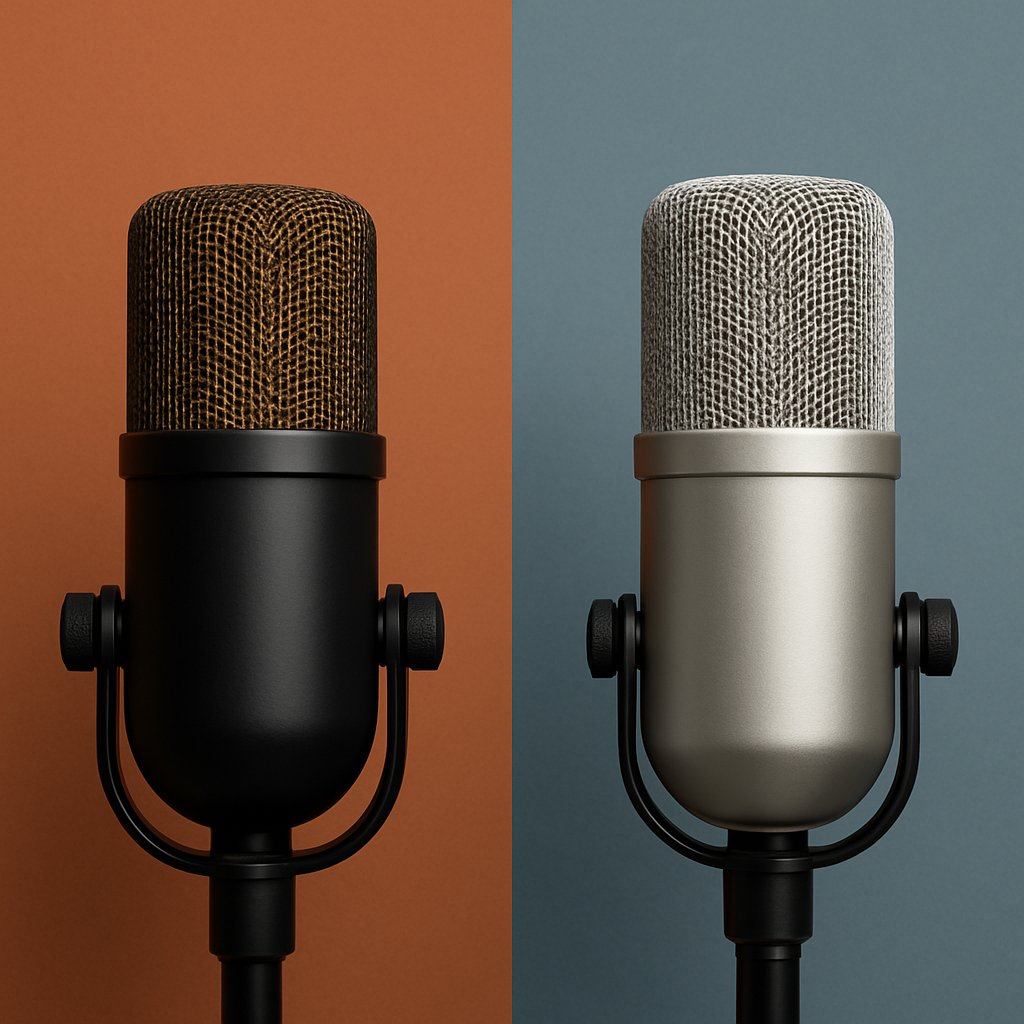
Navigating the world of microphones, you’ll quickly encounter heated discussions around “colored” versus “transparent” mics. The heart of the debate is surprisingly straightforward: do you want your microphone to add its own distinctive flavor to your sound, or simply capture the source as honestly as possible? Grasping this essential choice is the first step toward selecting the right tool for your creative projects.
This guide will walk you through what these terms mean, how microphones influence your sound, and how to choose what’s best for your needs—all with practical advice and clear explanations, not hype.
Understanding Microphone Character: Colored vs. Transparent
No microphone is completely invisible. Every model shapes your sound to some degree, but the amount and kind of influence makes all the difference.
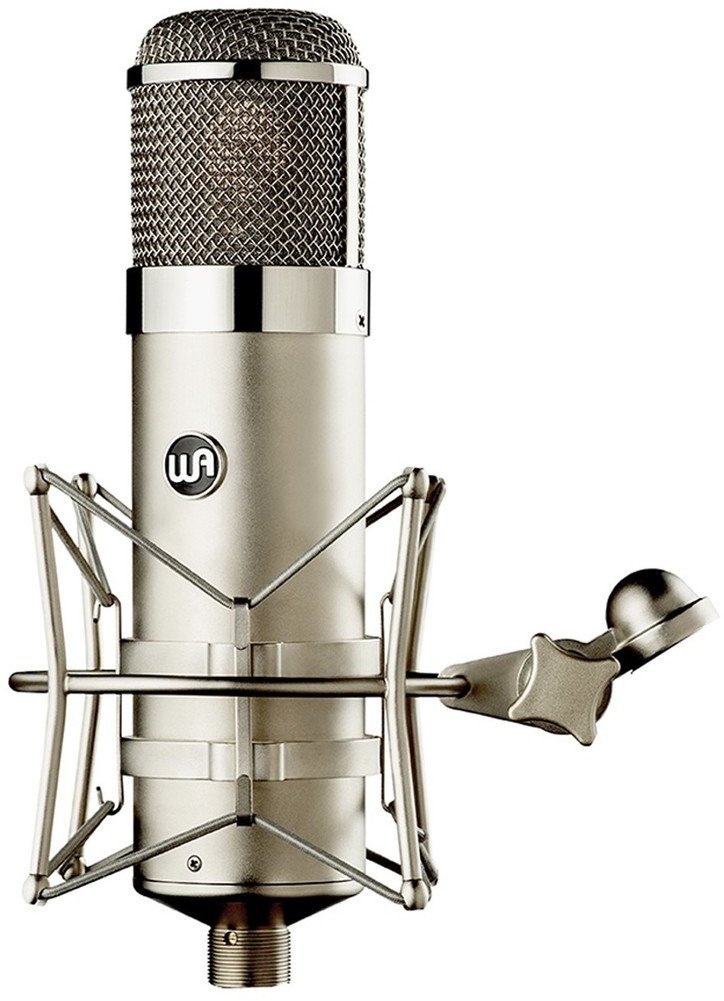
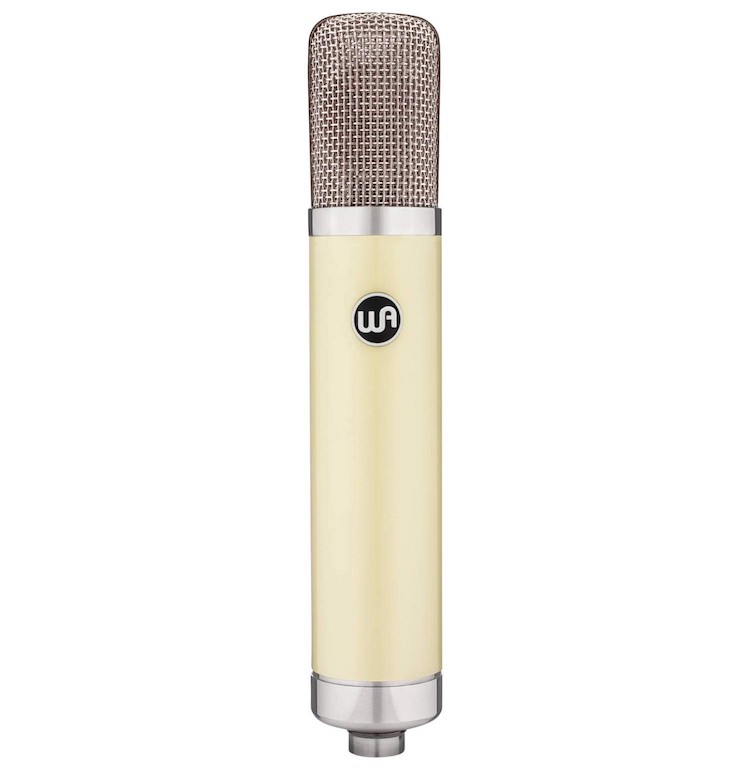
Colored microphones are intentionally designed to modify your audio signal. They might add warmth, presence, or a pleasing grit—subtly thickening a vocal, boldening a guitar, or giving drums extra punch. These mics often have frequency boosts, gentle harmonic distortion, or unique resonances resulting from their components and build. For example, some microphones give vocals a signature smoothness with a tailored midrange, while others are coveted for lush, robust tone. One such example in this category is the Warm Audio WA-251 Tube Condenser Microphone, known for its vintage warm character with smoother highs with a tight low-end.
In contrast, transparent microphones aim to keep their imprint as minimal as possible. Their purpose is faithful reproduction—delivering your performance with uncolored detail, nuance, and accuracy. High-end models are celebrated for their neutrality, making them the go-to choice when capturing the true sound of acoustic instruments or ensembles.
Understanding these fundamental approaches is key, because whether you want coloration or authenticity often comes down to your genre, project, and personal taste. To learn more about the science behind these differences, including how frequency response and “colored” versus “flat” designs impact audio recordings, check out this in-depth guide to microphone frequency response and coloration from Indiana University, which offers a comprehensive explanation of the concepts discussed here.
How Microphones Shape Sound: Key Factors Behind the Tone
The difference between colored and transparent microphones isn’t just marketing speak. It’s rooted in careful engineering and material choices:
- Frequency Response: Colored mics usually emphasize or soften certain frequencies, shaping how vocals or instruments stand out in a mix. Transparent models strive for a “flat” response curve, minimizing any alteration.
- Harmonic Distortion: Some designs intentionally introduce gentle saturation, adding richness or “vibe.” Transparent mics work hard to avoid this, preserving a clean signal.
- Transient Response: This refers to how quickly a mic reacts to sudden sounds like drum hits or a plucked guitar string. Faster response means more realism and clarity; slower can smooth out harsh edges.
- Off-Axis Behavior: The way sound is picked up from angles other than directly in front can color the recording—shaping ambience, bleed, and the sense of space.
None of these decisions happen in isolation. For instance, condenser microphones (especially small-diaphragm types) are often selected for their speed and accuracy, making them popular for transparent applications. Ribbon and dynamic mics, however, can round off aggressive sounds, lending a classic or mellow character to recordings.
Transformers, Electronics, and Build Materials
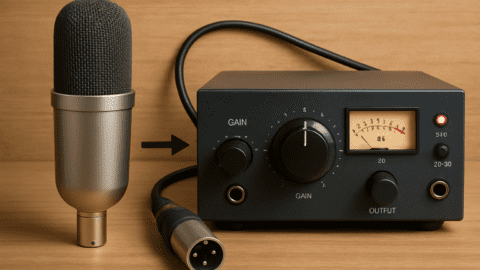
Internal components matter, too. A transformer inside a mic can naturally compress transients and impart harmonics, subtly sweetening your signal. Transformerless mics, by contrast, focus on sheer transparency. Even the metals used in the mic’s grille, or the tension of its diaphragm, affect how resonances and frequencies are handled. Put simply, every aspect of a microphone’s construction shapes its unique sound. This quest for coloration or clarity is not limited only to microphones—preamps like the legendary Neve 1073SPX are also renowned for shaping tonal character through their circuitry and transformer choices.
Matching the Mic to the Music
Deciding on colored or transparent isn’t a matter of right or wrong—it’s about what serves your style and intentions.
- Pop, Rock, and Hip-Hop: If you want bold, attention-grabbing vocals or hard-hitting drums, a colored mic can get you there with extra vibe and immediacy—sometimes saving you hours of post-production. Here, audio accuracy is often less valued than distinct presence in the mix.
- Jazz, Classical, and Folk: For genres that prize authenticity and realism—where capturing every nuance of the performance matters—transparent microphones shine. Listeners expect to be transported into the performance space, so immaculate, uncolored detail is essential.
- Electronic, Experimental, and Ambient: In these creative fields, there are no fixed rules. You might select a colored mic to introduce distinctive flavor to one track, and a transparent mic to preserve delicate textures on another. Often, blending both types yields the most inspiring results.
No matter your preferred genre, the character of your microphone becomes another instrument in your sonic palette.
Context Matters: Recording Environment and Mic Choice
It’s easy to focus only on the microphone, but your recording space is equally important. Transparent mics will faithfully reveal both the beauty and the flaws of your room, capturing reflections, noise, and ambiance in great detail. In contrast, colored mics can gently conceal an untreated environment’s rough edges, emphasizing your source and downplaying distractions.
For close-miking situations in less-than-ideal rooms, a bit of coloration can actually be an advantage. On the other hand, in well-treated studios or lush natural spaces, a transparent mic can deliver breathtaking realism.
Considerations for Your Budget and Mic Collection
Starting on a budget? A neutral, transparent microphone is often the wisest first purchase. It covers a wide range of uses and gives you a clean slate for experimenting with EQ or effects later. Colored microphones, while sometimes more expensive, offer sounds uniquely difficult to replicate digitally and become valuable creative tools as you expand your setup.
As your collection grows, aim for variety—a couple of neutral options for versatility, and a few colored mics for when you want to make a bold statement.
Evaluating Microphones: Listening in Context
No amount of online advice can beat hearing a microphone for yourself. If you’re able, try different models with your own voice or instruments in your usual recording environment. Pay attention to how each microphone renders frequencies, handles detail and background noise, and sits in a full mix—not just in isolation.
Ask yourself:
- Does the microphone naturally flatter your source or require lots of processing?
- Does it bring out pleasing details, or exaggerate flaws and unwanted resonance?
- How does it handle the space and ambiance in your room?
Your ears—and your unique setup—are the final judge.
Final Thoughts: Let Your Ears Lead the Way
Colored and transparent microphones each have a place in music and audio production. Instead of chasing hype or sticking to brands, focus on what your project truly needs—some sessions demand faithful accuracy, others thrive on personality and attitude.
With thoughtful selection and a willingness to listen critically, you’ll discover microphones that elevate your recordings—whether you’re after pure realism or a signature sonic stamp. Trust your curiosity, and enjoy the journey of finding the perfect sound for your music.