Apogee Duet 2

Apogee Duet 2: Is It Worth Your Money?
If you’re searching for an audio interface that combines professional sound quality with a clean, user-friendly design, the Apogee Duet 2 (see current price) is a compelling choice—especially for Mac and iOS users. Designed for those who value crystal-clear audio over maximum connectivity, the Duet 2 stands out with its focused features and portable build. But is it the right fit for your needs? Let’s take a closer look at what the Duet 2 offers, who it’s for, and where its limitations might matter, so you can make an informed decision about your audio setup.
Getting to Know the Apogee Duet 2
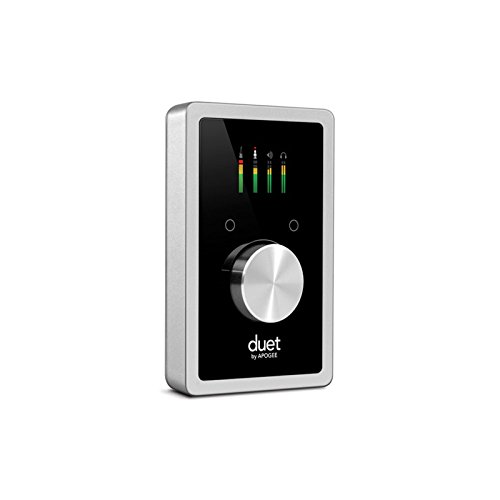
The Apogee Duet 2 is a 2-in/4-out USB audio interface created for musicians, podcasters, and producers who want reliable, professional-grade recording without clutter. With two high-quality analog inputs and a dedicated stereo headphone output, the Duet 2 efficiently covers the needs of solo creators or those recording a couple of sources simultaneously—such as vocals and guitar. While it’s not suited for multitracking a full band, its simplicity serves small and mobile setups exceptionally well.
This interface is targeted toward users within the Apple ecosystem. Apogee has forged a reputation for removing obstacles between your creativity and your finished sound, focusing instead on premium conversion and preamp quality with no unnecessary distractions. The Duet 2 fits comfortably between basic budget models and complex studio racks, so you get high fidelity and elegant usability without excess.
For anyone looking to dig deeper into setup, features, or technical details, you can check out the official Apogee Duet 2 user manual for comprehensive guidance straight from the source.
Apogee’s Philosophy and Legacy
To further understand the value the Duet 2 brings, it helps to know where Apogee is coming from. Apogee Electronics has long been recognized for delivering exceptional audio interfaces to studios worldwide, and its first Duet set a new benchmark for portable sound quality among Mac users. With the Duet 2, Apogee continues this legacy, offering improved build and even better sonic performance. This clarity of purpose—prioritizing sound, reliability, and a seamless user experience—shapes every detail of the product.
Design and Everyday Use

Every aspect of the Duet 2’s design is about blending form and function. Its sleek aluminum chassis feels solid and premium, while remaining light and compact enough to travel. The tactile top-panel encoder and bright OLED screen place controls at your fingertips. A proprietary breakout cable manages the connections, helping keep your workspace clean, though it does mean you’ll want to keep tabs on this essential accessory.
Apogee’s choice of materials and layout reflect its intended user: someone who needs a reliable, portable companion—equally at home on a desk or slipped into a backpack. While some manufacturers focus on ruggedness with heavier builds, Apogee prioritizes a balance of portability and durability. For those who appreciate American craftsmanship, it’s worth noting the Duet 2 is made in the USA.
Spec Breakdown: What You Get (and What’s Missing)
The Duet 2 offers a focused set of features aimed at uncompromising sonic clarity. Here’s a quick overview:
- Inputs/Outputs: 2 XLR/TRS combo jacks, 2 balanced ¼” monitor outs, plus a dedicated headphone output. No digital inputs (ADAT/SPDIF) or onboard MIDI.
- Preamps: Ultra-quiet with up to 75 dB of gain, suitable even for low-sensitivity microphones. Phantom power is available for condensers. For some users, pairing the Duet 2 with an external preamp such as the Warm Audio WA73-EQ can further elevate vocal and instrument recordings, harnessing the best aspects of both clean and character-driven sound.
- Audio Conversion: 24-bit/192kHz resolution ensures your recordings retain stunning detail.
- Compatibility: Exclusively Mac and iOS—no Windows support.
- Control & Software: The OLED display, touchpads, and Apogee’s intuitive Maestro app allow for straightforward routing and monitoring.
- Power: Mac users benefit from USB bus power; iOS devices need an external supply.
- Monitoring: Independent volume control for headphones and main outputs enhances flexibility in desktop and mobile workflow.
- Not Included: You won’t find built-in effects, DSP, or MIDI support here—the Duet 2 is singularly focused on delivering top-tier audio recording and playback.
Sound Quality and Performance

It’s here that the Duet 2 truly shines. Its preamps are remarkably transparent, capturing your sources without coloring the sound. Whether you’re tracking vocals, acoustic guitar, or podcasts, what you record is a faithful representation of your performance. Headroom is ample, so you don’t have to worry about unwanted distortion, and latency is low enough to support comfortable real-time monitoring—a must for singers and instrumentalists alike.
This clarity does come with a practical note: the supplied breakout cable, while handy for clean setups, is integral to operation. If you travel often or move your interface around the studio, be gentle with this connection, as repeated stress can cause wear over time. For strictly stationary or careful users, however, the benefits outweigh the risk.
Integration With Your Digital Audio Workstation
For Mac-based workflows, integration is seamless. The Duet 2 works smoothly with digital audio workstations like Logic Pro X, GarageBand, Ableton Live, and other major DAWs, with drivers that are mature and reliable. Occasional updates may be needed as Apple releases new OS versions, but setup is typically straightforward. On iOS devices, just remember to carry an external power supply for longer sessions. The included Maestro software puts deep routing and control at your fingertips, without taxing your system.
Strengths and Limitations: Weighing the Pros and Cons
As with any focused interface, the Duet 2 brings both notable strengths and some important tradeoffs. Let’s explore both sides to help you understand where it fits best.
Highlights
- Clean, professional sound quality in a minimalist, portable chassis.
- Elegant design with a bright OLED for clear metering.
- Effortless integration with Mac and iOS platforms, including flexible Maestro software for routing.
- Bus-powered convenience for Mac users.
Tradeoffs
- Proprietary breakout cable is crucial—and not cheap to replace.
- Not compatible with Windows systems.
- Limited input count—sufficient for solo setups but not for larger tracking needs.
- No onboard DSP, effects, or MIDI connectivity.
- iOS use requires additional power.
- Premium price reflects the focus on sound quality rather than features.
How It Stacks Up: Comparisons With Other Interfaces
Choosing an interface isn’t just about specs on paper—it’s about matching the right tool to your workflow. The Duet 2 often gets compared to the Focusrite Scarlett 2i2, Universal Audio Apollo Twin, Audient iD14, and MOTU’s M2/M4. While the Scarlett is broadly compatible and affordable, it doesn’t match the Duet’s clarity or headphone amp quality. The Apollo Twin adds powerful onboard effects and premium conversion, but it comes with a much higher price tag. Audient’s iD14 provides solid preamps and expandability, but lacks the same Mac-centric polish. Meanwhile, MOTU is feature-rich at a lower price, yet its overall sound and build trail behind Apogee.
This context reveals the Duet 2’s sweet spot: Mac and iOS users who demand high audio fidelity and simple operation, and who don’t need lots of channels or advanced DSP. It’s not a universal fit—but for its target audience, it’s unmatched in sonic focus and design.
Is the Duet 2 Right for You?
Given its price point and the thoughtful design, the Duet 2 is clearly aimed at users who prize quality over quantity. If you’re likely to outgrow a two-in, four-out setup or expect to need MIDI or onboard effects, consider interfaces that favor flexibility over sheer sound fidelity. On the other hand, if you’re a dedicated Mac or iOS user—even, say, a singer-songwriter, podcaster, or solo producer—the Duet 2 could easily become an essential part of your setup.
Staying within Apple’s world ensures ongoing support and compatibility. However, if you imagine switching to Windows in the future, or if you need a rugged interface for rough conditions, there may be better options for your needs.
Who Will Get the Most From the Duet 2?
- Mac and iOS creators needing uncompromised sound quality with minimal hassle.
- Solo musicians, podcasters, and singer-songwriters seeking a straightforward, powerful recording tool.
- Anyone looking for a premium, portable interface that fits seamlessly into creative workflows.
- Those who value Apogee’s commitment to US manufacturing and solid support.
Who Should Explore Alternatives?
- Windows users or those needing cross-platform flexibility.
- Artists or producers who require more than two inputs and greater expandability.
- Users wanting MIDI or digital I/O, or built-in DSP effects for zero-latency monitoring and creative options.
- Shoppers focused primarily on budget or those needing heavy-duty, field-ready hardware.
Final Thoughts
The Apogee Duet 2’s appeal lies in its purity of purpose: it delivers top-tier audio quality as simply—and as beautifully—as possible for Mac and iOS users. While you may find less expensive or more versatile interfaces, few match the Duet 2’s blend of sonic excellence, elegant design, and portability. For solo and small-setup creators where sound truly matters, the Duet 2 is not just a purchase, but an investment in the fidelity of your creative work.