You’ve set up your first condenser, found a good level and recorded a verse you’re actually happy with. Then you play it back on headphones, and every P lands like a fist on the desk. “Pop” thumps. “Baby” thumps twice. The quiet lines sound lovely, and the rest sounds like a kick drum got into the vocal.
That thump is why pop filters exist, and why one turns up next to almost every microphone in an online cart. So do you need a pop filter? It depends on the mic you own and how close you get to it, and a couple of the fixes cost nothing at all.
What a pop actually is
Say “pop” with your hand an inch in front of your mouth. Feel that little puff? That’s the whole problem.
Some sounds, P and B most of all, are made by stopping the air with your lips and letting it go in a burst. Your ears never notice. A microphone an inch or two away does: the puff hits its diaphragm, the thin skin inside that moves with your voice, like a gust of wind, and shoves it much further than your voice ever would. What you hear back is a low thump on every P and B. On a condenser, it can push the diaphragm so far that the word after it distorts too.
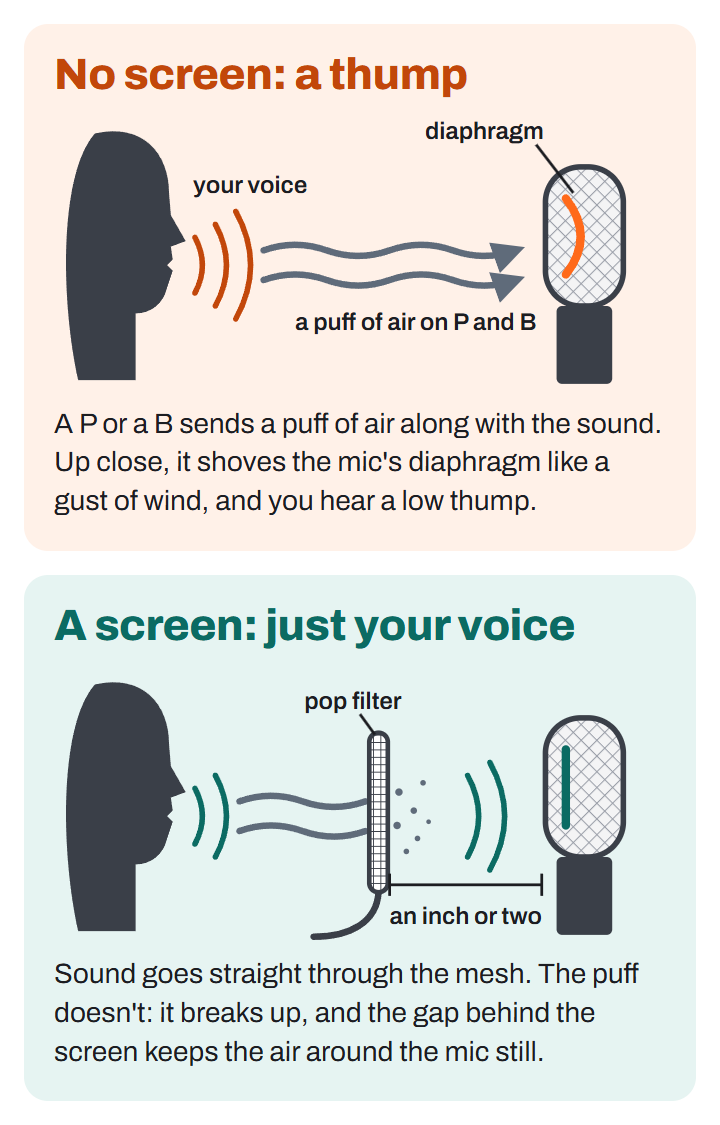
A pop filter is a screen between your mouth and the mic. Sound passes straight through it. The burst of air doesn’t: the mesh breaks it up and slows it down, so by the time it reaches the mic there’s nothing left to thump.
That’s also why it needs a gap to work. Sound On Sound’s technical editor, Hugh Robjohns, suggests at least an inch between the screen and the mic, and ideally two or more, so the air behind the screen stays still. Get as close to the screen as you like. Just leave the mic its little pocket of calm.
Which mics need one
Not every mic pops the same. It comes down to how light the diaphragm is and what sits in front of it.
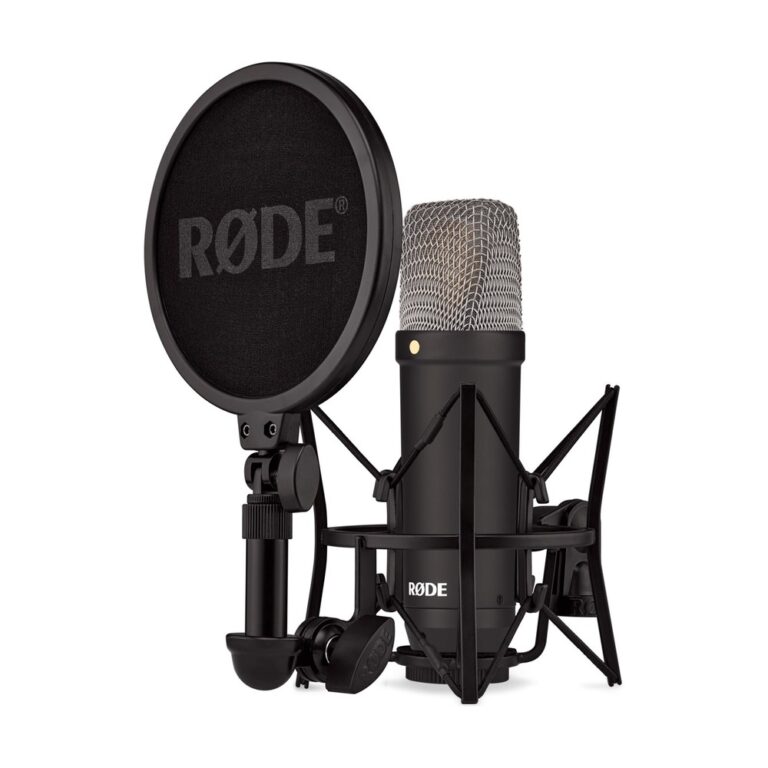
Condensers: yes. A condenser’s diaphragm is a whisper-thin film, which is what makes it so good at catching detail, and also what lets a puff of air throw it around. On most, there’s nothing in front of it but a thin metal grille. Sing into one from a few inches away and you’ll hear it on the first P. That’s why our guide to dynamic vs condenser mics puts a pop filter on the list with every condenser. Check the box before you buy one, though: two of the picks in our best condenser mics at every price, the RØDE NT1 Signature Series and the Lewitt LCT 440 PURE, already come with one.
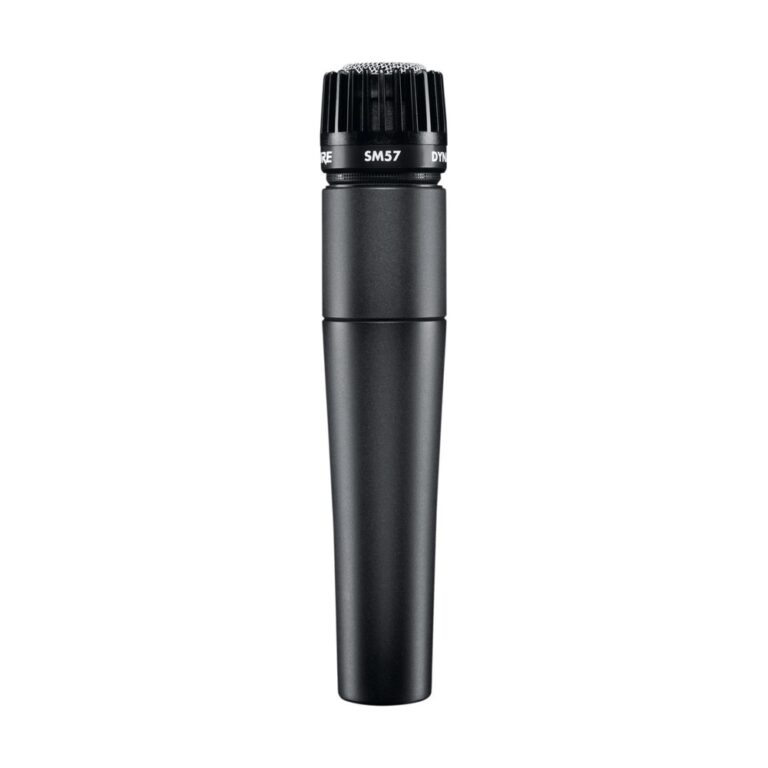
The Shure SM58: usually not. That big ball on top isn’t just a grille. Shure builds a wind and pop filter into it, and the ball keeps your mouth a little further from the capsule too, so you can sing straight into it. Its sibling, the SM57, has the same capsule behind a small, flat grille with nothing in it to stop a hard P, so for vocals it wants a screen or a foam cover.
The Shure SM7B: not with its cover on. It comes with two foam windscreens, a standard one and a bigger one Shure includes for talking up close, which is the very job a pop filter does.
USB mics: it depends what’s inside. A USB mic is a condenser or a dynamic with the interface built in, and the same rules apply. Plenty of the best-known ones, the Blue Yeti among them, are condensers, and they want a pop filter just as much as any other. Still choosing? Our guide to USB or XLR mics covers which kind suits which job.
The fixes that cost nothing
Before you buy anything, try moving the mic. The puff shoots straight out from your lips, so it only does damage when the capsule sits right in its path.
Hugh Robjohns’ advice is to put the mic a little above your mouth, around forehead height, or slightly off to one side, so the bursts go under or past the capsule while your voice still reaches it. Tilt it down toward your mouth if you raise it, or turn your head a touch so you sing just past it. You can step back a little too: Neumann suggests about 8 to 12 inches between singer and mic for vocals at home, and every inch takes some force out of the puff.
And if you need a screen tonight and the shops are shut, there’s the oldest trick in the studio: a stocking stretched over a bent coat hanger. It works. It also looks exactly like a stocking stretched over a bent coat hanger. Robjohns’ tidier version is two layers of stocking over an embroidery hoop, and he’ll even accept a frying pan splatter guard. None of it is pretty, and all of it beats a thump on every P.
Pop filter or foam windscreen?
A foam windscreen, the sponge cover that slips over the head of the mic, stops pops too, and it’s cheaper and smaller than a screen. So why bother with a pop filter?
Because foam sits right over the capsule, and it takes some of the top end with it. Robjohns puts it plainly: foam affects a mic’s high frequencies, usually noticeably, while a pop screen does the same job with much less effect on the sound. On a dynamic mic used up close, like an SM57 on vocals or an SM7B, a foam cover is the usual answer and works well. On a condenser you bought for its detail, it muffles the very thing you paid for. Use a screen.
Fabric or metal: our two picks
Pop filters come in two kinds. The usual one is a ring with fine fabric stretched over it, nylon most often, in one or two layers. The other is a metal screen full of small holes. Both stop pops.
Fabric is cheap and does the job, but it’s soft: over time it can sag, tear and get grubby, and it’s hard to clean. Metal costs more and lasts, since there’s nothing in it to tear or stretch. Robjohns also rates perforated metal screens above one or two layers of fabric.
Fabric: Aokeo pop filter
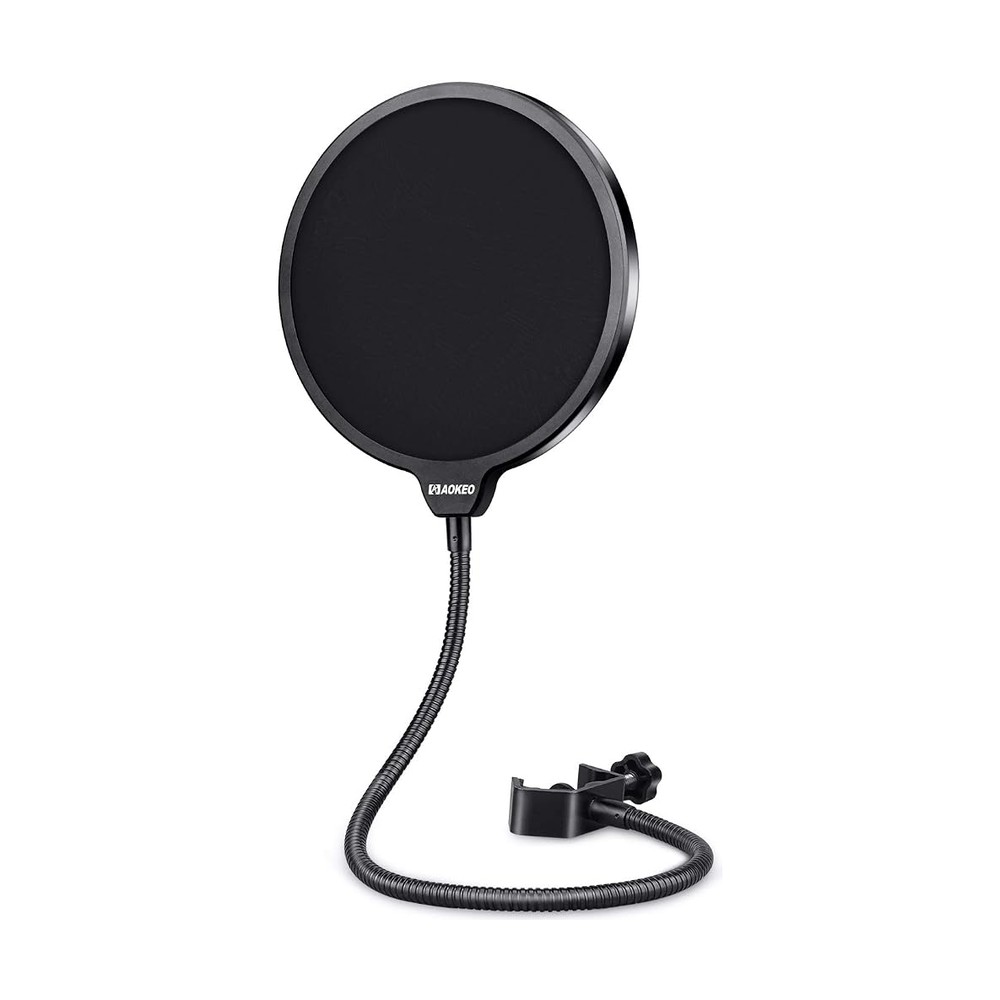
For most people starting out, this is the one. It’s the budget pick at Gearank, which scores gear from thousands of reviews, and it’s as plain as pop filters get: two layers of mesh with a gap between them, so the first breaks up the puff and the gap takes care of the rest. The screen is about 6 inches across, the usual size for a vocal mic, the steel gooseneck holds it where you bend it, and the screw clamp fits most mic stands and boom arms.
The catch: it’s fabric, so treat it as something that wears out. When the mesh gets grubby or loose, you’ll buy another, and that won’t break the bank.
Metal: Stedman Proscreen XL V2
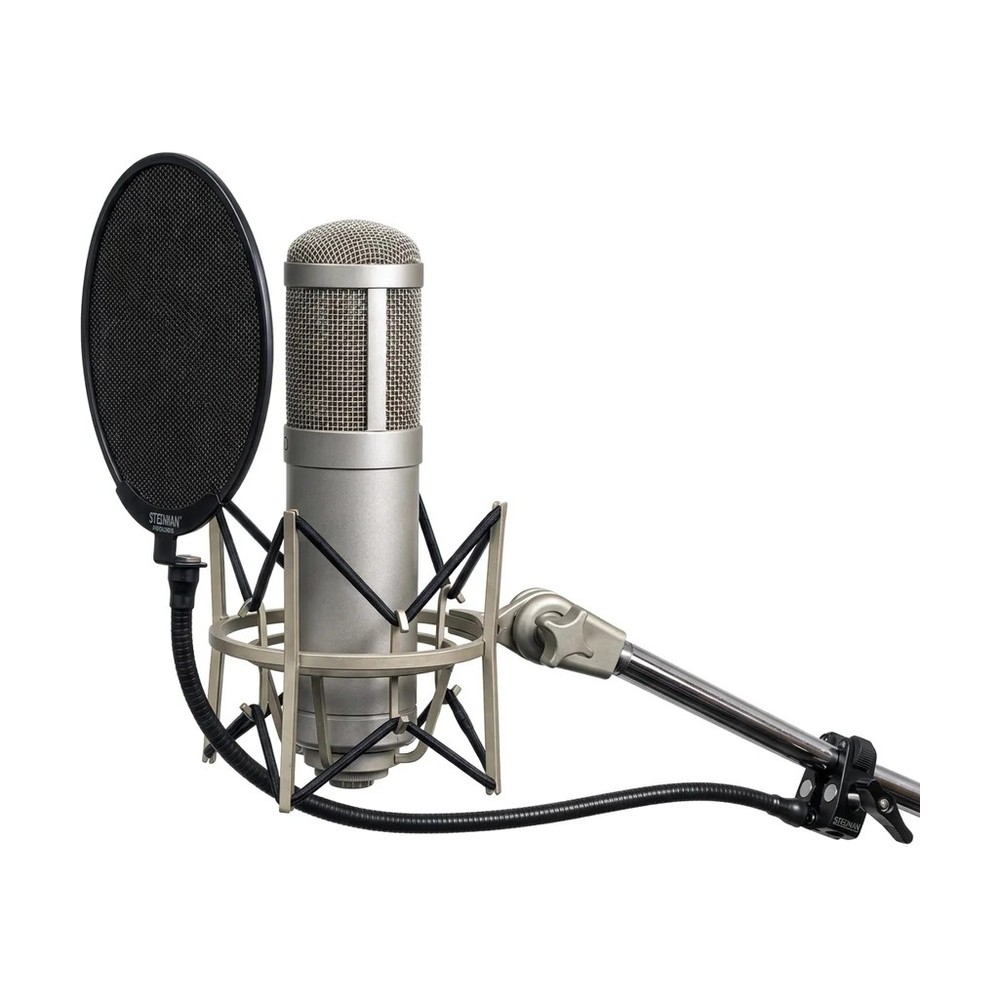
If you record vocals every week, buy the metal one once and stop thinking about it. Stedman’s Proscreen XL is one of the best-known metal pop filters, and Gearank’s pick among the larger ones. Its patented screen doesn’t just slow the puff down the way fabric does: Stedman designed it to send the air downward, away from the capsule, while your voice goes straight through its openings. The screen is 6 inches across, and the V2, the current version, adds a sturdier 16.5-inch gooseneck and a clamp that fits a boom arm up to 1.5 inches wide.
The catch: it costs several times as much as the Aokeo. For a voice you record once a month, that’s hard to justify. For one you record every day, it should outlast a whole stack of fabric filters.
Setting one up
A pop filter only works in the right spot, and the right spot is mostly about the gap.
Clamp it to the mic stand or boom arm, below the mic, and bend the gooseneck so the screen sits between your mouth and the front of the capsule. On a condenser you sing into from the side, that’s the side the maker marks as the front, usually with the logo. Then leave an inch or two of air between the screen and the mic, as in the diagram above, and get as close to the screen as feels natural.
Angle it a little, too: Neumann’s advice is to tilt the screen slightly so it isn’t parallel to the capsule. And keep the gooseneck and clamp clear of the mic and its mount, so a knock on the screen doesn’t travel into the mic. Bumps that go up the stand are a job for a shock mount, which our piece on whether you really need a shock mount explains.
Last, check that the gooseneck holds. A long, thin one droops over a session, which is why Robjohns warns against them. If yours sags, clamp it closer so it has less to hold up.
Can you fix pops in the mix?
Sometimes, but it’s slow work. A high-pass filter switched on just for the moment of the pop can take the thump down, but Robjohns says it rarely works without some audible compromise. Swapping the popped syllable for a clean one from another take works better, and a spectral editor such as iZotope RX can paint the thump out. Both take time and a good ear.
Prevention is far easier. If you hear a pop while you’re recording, sing the line again. It takes ten seconds now and saves twenty minutes later.
So, do you need a pop filter? If you record vocals or voice up close to a condenser, yes, and it’s one of the cheapest upgrades in a home studio. If you sing into an SM58, or an SM7B with its windscreen on, you probably don’t: try angling the mic first. Whatever you use, leave that little gap.
Happy producing.